Introduction: A Decision That Impacts Everything
In food and beverage manufacturing, ingredient selection determines more than cost.
It influences product performance, consumer perception, and long-term brand positioning.
For decades, refined sugar has been the default sweetener.
However, modern market demands are changing how manufacturers evaluate ingredients.
Today, companies must consider functionality, stability, and clean-label compatibility.
Because of this shift, palm (Arenga) syrup is increasingly compared with refined sugar as a viable alternative.
This guide provides a structured comparison to help manufacturers make informed decisions.
Composition: Simplicity vs Complexity
Refined sugar consists primarily of purified sucrose.
Its composition is simple and uniform.
This simplicity ensures consistent sweetness but limits functionality.
In contrast, palm (Arenga) syrup contains a broader composition.
It includes:
- natural sugars
- trace minerals
- organic compounds
Because of this, palm syrup offers more than sweetness.
It contributes to flavor, texture, and overall product structure.
Therefore, composition becomes the first major point of differentiation.
Processing Method: Multi-Step vs Single-Process
Refined sugar undergoes multiple processing stages.
These often include:
- extraction
- purification
- crystallization
- refining
Each step removes impurities but also strips natural characteristics.
On the other hand, palm (Arenga) syrup is produced through a single controlled process.
Fresh sap is collected and evaporated to achieve the desired concentration.
No reprocessing or chemical refinement is required.
Because of this, palm syrup retains its natural integrity.
Therefore, processing method directly affects product authenticity.
Flavor Profile: Neutral vs Complex
Refined sugar provides clean, neutral sweetness.
While predictable, it does not enhance flavor.
As a result, manufacturers often add flavoring agents.
In contrast, palm (Arenga) syrup offers:
- subtle caramel notes
- natural depth
- balanced sweetness
Because of this, it enhances the overall flavor profile.
Therefore, products become more distinctive without additional ingredients.
Texture and Mouthfeel: Basic vs Enhanced
Texture plays a key role in consumer perception.
Refined sugar contributes sweetness but does not significantly affect mouthfeel.
In contrast, palm (Arenga) syrup adds body and smoothness.
Because of its composition, it improves the overall texture of beverages and foods.
Therefore, products feel more premium.
Stability in Production: Predictable vs Functional
Refined sugar is consistent in composition.
However, it does not contribute to formulation stability beyond sweetness.
In contrast, palm (Arenga) syrup, when produced under controlled conditions, offers:
- stable concentration
- predictable viscosity
- consistent performance
Because of this, it supports efficient production systems.
Therefore, stability becomes an added advantage.
Clean Label Compatibility
Clean label has become a major factor in product development.
Refined sugar, due to its extensive processing, does not always align with this trend.
In contrast, palm (Arenga) syrup supports clean-label positioning.
Because it is minimally processed, it offers greater transparency.
Therefore, brands can communicate natural and authentic product stories.
Shelf Life and Storage Performance
Shelf life depends on moisture, concentration, and microbial control.
Refined sugar, in solid form, is stable.
However, liquid sugar solutions may require careful handling.
Palm (Arenga) syrup, when properly produced, offers:
- controlled moisture
- reduced water activity
- stable performance during storage
Because of this, it maintains quality over extended periods.
Therefore, it supports global distribution.
Formulation Complexity
Refined sugar often requires additional ingredients to achieve desired results.
Manufacturers may add:
- flavor enhancers
- stabilizers
- texturizers
In contrast, palm (Arenga) syrup performs multiple functions.
It provides sweetness, flavor, and texture simultaneously.
Because of this, formulation becomes simpler.
Therefore, ingredient lists become shorter and cleaner.
Cost Perspective: Price vs Value
Refined sugar is generally lower in cost per unit.
However, cost should be evaluated beyond price.
Additional ingredients, reformulation, and processing adjustments increase total cost.
Palm (Arenga) syrup may have a higher initial price.
However, it reduces:
- formulation complexity
- additional ingredient needs
- operational inefficiencies
Therefore, total value becomes more competitive.
Consumer Perception
Consumers increasingly evaluate products based on ingredients.
Refined sugar is often associated with highly processed products.
In contrast, palm (Arenga) syrup aligns with natural and clean-label expectations.
Because of this, it enhances brand perception.
Therefore, ingredient choice influences purchasing decisions.
Industrial Application Comparison
Refined Sugar:
- basic sweetness
- limited functionality
- widely available
Palm (Arenga) Syrup:
- multi-functional ingredient
- enhances flavor and texture
- supports clean-label positioning
Because of this, palm syrup offers broader application potential.
Risk Assessment
Using refined sugar carries minimal technical risk.
However, it may limit product differentiation.
Using palm (Arenga) syrup requires selecting a reliable supplier.
If production is not controlled, variability may occur.
Therefore, supplier capability becomes critical.
PT Rumah Seho Nusantara: Delivering Reliable Palm (Arenga) Syrup
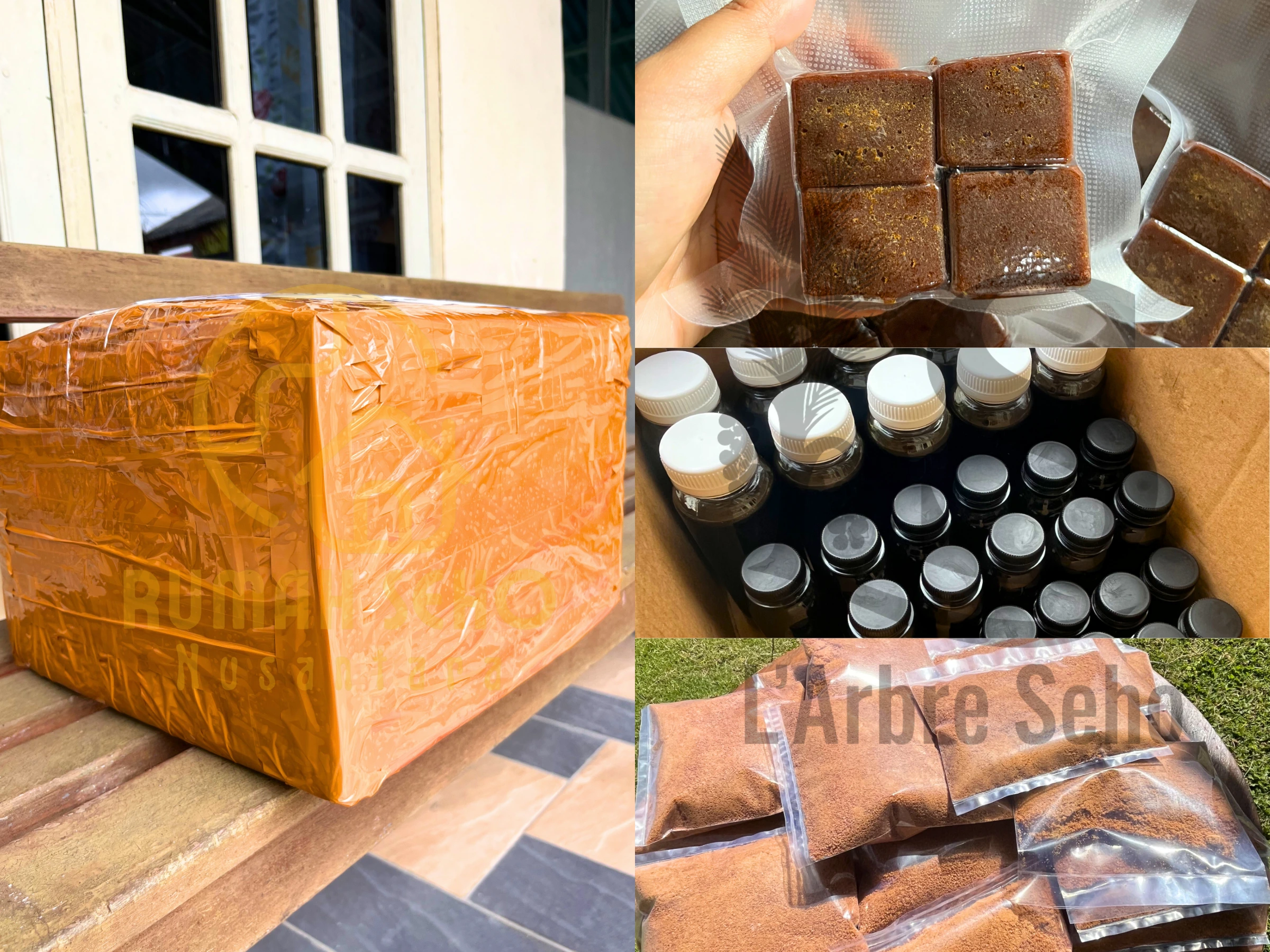
At PT Rumah Seho Nusantara, we provide palm (Arenga) syrup designed for industrial use.
We focus on consistency, stability, and performance.
Our production system includes:
- single-process evaporation
- no reprocessing or dilution
- hygienic production standards
- controlled moisture and concentration
We maintain measurable specifications:
Moisture: Max 25%
Fat Content: Max 2.5%
Ash Content: 1.10 – 1.15%
Because of this, our products ensure:
- stable sweetness
- predictable viscosity
- reduced fermentation risk
- shelf life up to 18 months
Therefore, manufacturers can rely on consistent performance.
When Should You Switch?
Switching to palm (Arenga) syrup makes sense when:
- product differentiation is needed
- clean-label positioning is a priority
- formulation complexity needs to be reduced
- premium positioning is targeted
Because of these factors, many manufacturers are making the transition.
Conclusion: A Strategic Ingredient Decision
Refined sugar remains a functional ingredient.
However, its limitations are becoming more apparent.
In contrast, palm (Arenga) syrup offers a broader range of benefits.
It supports:
- flavor enhancement
- texture improvement
- clean-label positioning
- stable performance
Because of this, it represents a strategic upgrade.
Ultimately, the choice between refined sugar and palm syrup is not just technical.
It is a decision that defines product quality and market positioning.
Contact Us
For more information about our palm (Arenga) syrup:
🌐 Website: www.palmlarbreseho.com
📞 Phone / WhatsApp: +62 896 9888 2428