Introduction: Why Standards Define Trust in Global Sourcing
In global food and beverage manufacturing, trust depends on measurable performance rather than claims.
Today, international buyers evaluate suppliers using structured criteria instead of assumptions. As a result, sourcing decisions rely heavily on consistency, traceability, and technical control.
Palm syrup introduces a unique complexity. Because it originates from fresh sap, natural variability can influence the final product.
However, manufacturers can manage this variability through disciplined systems.
For this reason, palm syrup manufacturing standards play a decisive role in ensuring reliability. Without these standards, manufacturers face risks such as inconsistent sweetness, fermentation, and unstable performance.
Raw Material Handling: The Starting Point of Quality
Quality begins at the source, not at the final stage.
Palm syrup production starts with sap collection from the Arenga palm tree. Immediately after tapping, the sap becomes highly reactive. Consequently, improper handling can trigger early fermentation.
To prevent this, producers apply controlled harvesting practices.
First, they use hygienic tapping methods. Then, they store sap in clean containers. After that, they transport the sap quickly to processing facilities.
As a result, the raw material maintains its integrity.
Within palm syrup manufacturing standards, upstream control ensures downstream consistency.
Hygienic Processing: Controlling Contamination Risks
After sap collection, processing becomes the next critical stage.
At this point, contamination risk increases significantly if hygiene is not maintained. Therefore, manufacturers implement strict sanitation systems.
For example, operators clean equipment regularly. In addition, production areas are monitored continuously. Furthermore, every processing step follows hygienic procedures.
Because of these practices, microbial activity remains controlled.
Consequently, palm syrup manufacturing standards require hygiene as a structured system rather than a routine task.
Controlled Evaporation: Ensuring Product Stability
Evaporation transforms sap into syrup.
During this stage, producers remove water while concentrating natural sugars. However, inconsistent evaporation leads to unstable results.
For instance, insufficient evaporation increases moisture levels. Meanwhile, excessive heating can alter flavor characteristics.
To avoid these issues, manufacturers control evaporation precisely.
They monitor temperature, adjust processing time, and measure concentration levels continuously.
As a result, each batch achieves consistent quality.
Therefore, palm syrup manufacturing standards emphasize controlled evaporation as a core requirement.
Moisture Control: The Core Stability Indicator
Moisture content directly affects product stability.
When moisture remains too high, water activity increases. Consequently, microbial growth becomes more likely.
In addition, excess moisture dilutes sweetness concentration. Therefore, manufacturers must use more syrup in formulations.
To manage this risk, producers define strict moisture limits.
They monitor moisture levels consistently throughout production.
As a result, the syrup remains stable during storage and shipping.
Because of this, palm syrup manufacturing standards treat moisture as a primary control parameter.
Mineral Balance: Maintaining Flavor Consistency
Palm syrup naturally contains minerals that influence taste.
These minerals affect sweetness perception and aftertaste. However, variations in mineral composition may lead to inconsistent flavor.
To ensure stability, manufacturers control mineral balance carefully.
They measure parameters such as ash content and adjust processing conditions accordingly.
As a result, the product maintains consistent flavor across batches.
Thus, palm syrup manufacturing standards include mineral monitoring as part of quality control.
Batch Consistency: Meeting Industrial Expectations
Industrial production requires repeatable results.
Each batch must perform consistently in formulation and processing. Otherwise, production efficiency may decline.
To achieve consistency, manufacturers implement structured quality control systems.
They monitor key parameters for every batch. Additionally, they compare results with defined specifications.
When deviations occur, corrective actions are applied immediately.
As a result, production remains stable.
Therefore, palm syrup manufacturing standards ensure consistency across all batches.
Fermentation Prevention: Protecting Product Integrity
Fermentation poses a significant risk in palm syrup production.
Because the product contains natural sugars, microbial activity may develop under certain conditions.
To prevent this, manufacturers apply integrated control systems.
First, they manage sap handling carefully. Then, they maintain hygienic processing. Finally, they control moisture levels precisely.
As a result, microbial growth is minimized.
During long-distance shipping, this control becomes even more critical.
Thus, palm syrup manufacturing standards focus on preventing fermentation through proactive measures.
Packaging Standards: Securing Product During Transport
After production, packaging becomes essential.
Palm syrup must travel across long distances before reaching manufacturers. Therefore, packaging must protect the product effectively.
Producers use food-grade containers to maintain safety. In addition, they apply secure sealing systems to prevent contamination.
Moreover, packaging materials are selected to withstand temperature variations.
As a result, the product remains stable during transportation.
Consequently, palm syrup manufacturing standards include packaging as part of quality assurance.
Traceability and Documentation: Supporting Transparency
Global buyers require transparency and accountability.
Therefore, manufacturers must provide clear documentation.
They record production processes, monitor quality parameters, and maintain traceability systems.
As a result, buyers can verify product consistency and origin.
In addition, documentation supports compliance with international standards.
Thus, palm syrup manufacturing standards include traceability as a foundation of trust.
Aligning with International Expectations
Global markets demand consistent quality.
Although regulations differ between regions, buyers expect similar standards.
Manufacturers must align their systems accordingly.
They maintain hygienic production, define measurable specifications, and ensure consistent output.
As a result, they meet international buyer expectations.
Therefore, palm syrup manufacturing standards reflect global requirements rather than local practices.
PT Rumah Seho Nusantara: Standard-Driven Production
At PT Rumah Seho Nusantara, we build our production system around measurable standards.
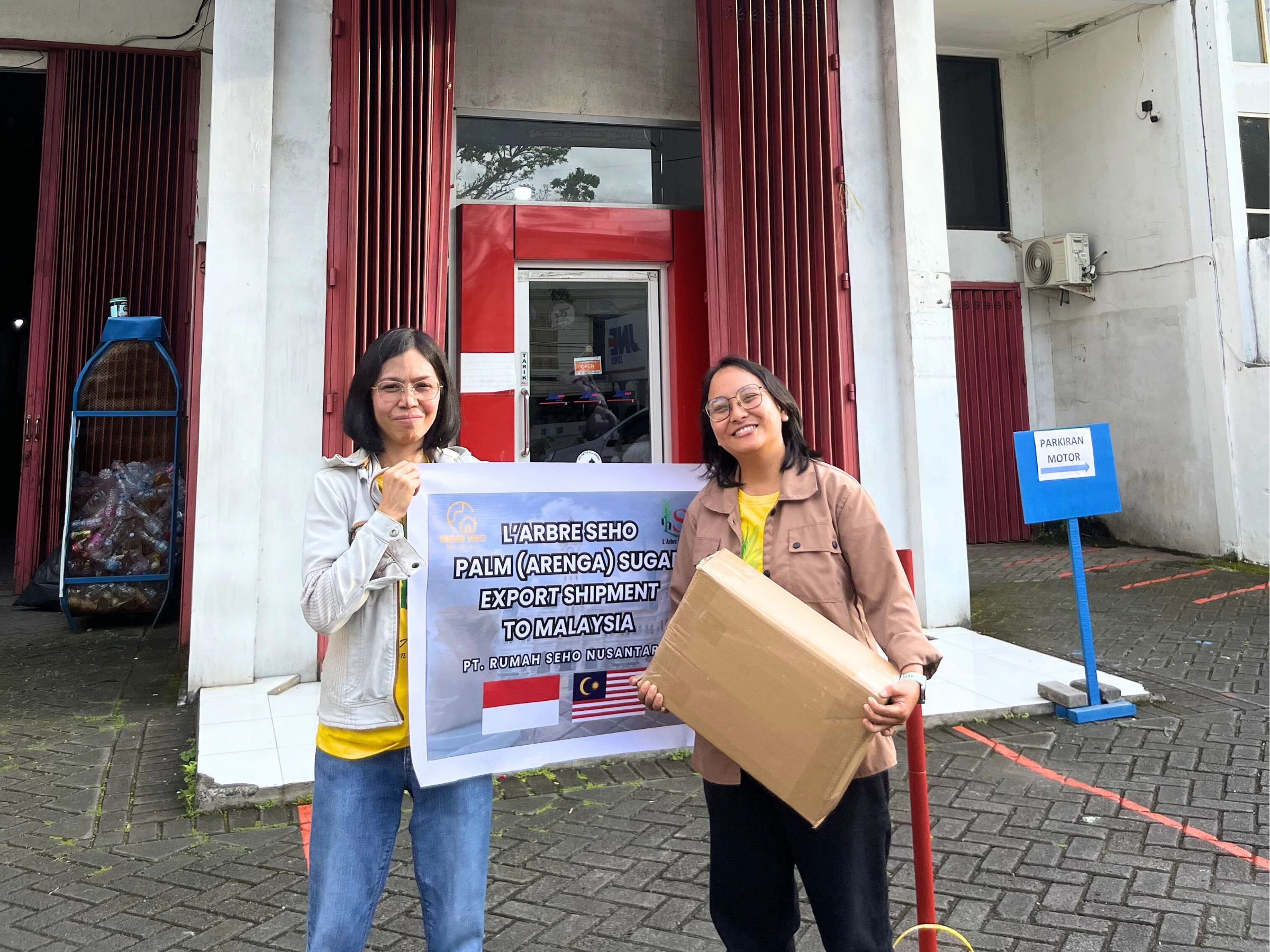
As a premium palm (Arenga) syrup manufacturer and supplier from Indonesia, we focus on consistency and reliability.
We control sap handling from the beginning. Next, we apply hygienic processing systems. Then, we maintain controlled evaporation and moisture levels.
In addition, we define clear specifications.
Our parameters include:
Moisture: Max 25%
Fat Content: Max 2.5%
Ash Content: 1.10 – 1.15%
These parameters ensure:
- stable sweetness
- balanced mineral composition
- predictable viscosity
- reduced fermentation risk
Furthermore, our packaging and export systems support global distribution.
Because of this structured approach, we align our production with international standards.
Conclusion: Standards Transform Variability into Reliability
Palm syrup production involves natural variability.
However, structured standards transform this variability into consistent performance.
Manufacturers who apply disciplined systems deliver stable results.
Therefore, palm syrup manufacturing standards define reliability in global sourcing.
For international buyers, these standards reduce risk and improve confidence.
Ultimately, reliable suppliers do not rely on claims.
Instead, they rely on control, consistency, and measurable performance.
Contact Us
For more information about our palm (Arenga) syrup and manufacturing standards:
🌐 Website: www.palmlarbreseho.com
📞 Phone / WhatsApp: +62 896 9888 2428