In food and beverage manufacturing, sweetness is far more than a taste component. Instead, it functions as a structural element within the formulation itself.
Sweetness influences balance, mouthfeel, aroma perception, aftertaste, and overall consumer experience. Even minor shifts in sweetness intensity can significantly alter how a product is perceived in the market.
For brands operating at scale, consistency is not optional. Variability introduces reformulation costs, operational inefficiencies, and potential brand dilution. Therefore, palm syrup for stable sweetness across production batches has become an increasingly strategic solution for professional manufacturers.
Consistency in sweetness does not happen by chance. Rather, it is engineered through disciplined production systems and controlled technical parameters.
Why Sweetness Consistency Matters More Than Ever
Modern consumers expect identical taste every time they purchase a product. Whether it is a bottled beverage, flavored tea, specialty sauce, or dairy alternative, repeatability defines trust.
When sweetness fluctuates, that trust weakens. Over time, inconsistency can erode brand credibility.
From a manufacturing standpoint, sweetness stability directly affects formulation reliability, automated dosing accuracy, flavor calibration, and shelf-life predictability. If sweetness drifts between batches, production teams must recalibrate recipes. As a result, efficiency declines and operational costs increase.
Sweetness stability, therefore, represents more than a sensory benefit. It serves as an operational necessity.
Understanding the Challenge of Natural Sweeteners
Palm syrup originates from natural sap. Because natural ingredients inherently carry variability, environmental conditions and harvesting cycles may influence raw sap composition.
Without strict process control, these variations can affect final sweetness intensity. Consequently, manufacturers must transform natural variability into controlled stability.
Palm syrup for stable sweetness across production batches requires controlled evaporation, measurable concentration levels, defined mineral balance, and strict moisture limits. When these elements are carefully managed, sweetness becomes predictable and reliable.
Professional discipline converts natural complexity into industrial consistency.
The Role of Concentration Control in Sweetness Stability
Sweetness intensity correlates directly with concentration levels.
If evaporation parameters fluctuate, sugar density shifts accordingly. Even small changes can influence perceived sweetness, especially in large-scale beverage systems.
For this reason, precise concentration control becomes essential. Uniform Brix levels ensure that each batch maintains consistent density. In turn, this protects recipe integrity, beverage calibration, sauce balance, and layered flavor development.
Stable concentration leads to stable sweetness. Manufacturers benefit from predictable sweetness response without repeated adjustment.
Mineral Balance and Sweetness Perception
Sweetness perception depends on more than sugar density alone. Mineral composition also shapes flavor character and aftertaste.
Ash content reflects mineral balance within the syrup. When ash levels vary significantly, subtle changes in sweetness perception may occur. These shifts can influence premium positioning.
By maintaining defined ash parameters, manufacturers preserve sweetness character across batches. As a result, flavor remains stable and consumer experience remains consistent.
Controlled mineral balance supports both technical reliability and brand sophistication.
Moisture Control and Its Impact on Sweetness Performance
Moisture level directly affects sweetness intensity and shelf-life stability.
Excess moisture dilutes sweetness while increasing fermentation risk. Conversely, insufficient moisture alters viscosity and processing behavior. Both extremes introduce production challenges.
Maintaining moisture within defined limits ensures consistent sweetness strength, stable viscosity, and reliable shelf-life performance. Therefore, moisture control becomes inseparable from sweetness stability.
Palm syrup for stable sweetness across production batches depends heavily on disciplined moisture management.
Sweetness Stability and Production Efficiency
In high-volume beverage production, sweetness calibration typically relies on automated systems.
When ingredient sweetness varies, dosing mechanisms require recalibration. This adjustment disrupts production flow and increases waste. Over time, small inefficiencies compound into significant operational cost.
By contrast, stable sweetness across production batches enables accurate dosing, reduced reformulation, predictable flavor output, and streamlined production cycles.
Operational calm emerges from predictable inputs. Efficiency improves when ingredients behave consistently.
Cold Beverage Applications and Sweetness Consistency
Cold beverage manufacturing introduces additional complexity.
Lower temperatures influence dissolution behavior and perceived sweetness intensity. If concentration varies between batches, sweetness differences may become more noticeable in chilled applications.
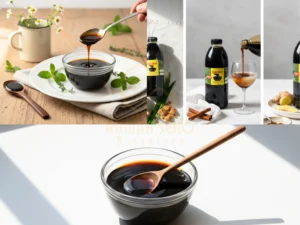
Palm syrup in liquid form integrates efficiently into cold beverage matrices. When produced under controlled parameters, it maintains predictable sweetness performance even in temperature-sensitive systems.
This reliability is particularly important for ready-to-drink beverages, iced teas, cold brew coffee, and dairy alternatives. Sweetness must remain consistent regardless of serving temperature.
Shelf-Life Stability and Long-Term Sweetness Performance
Sweetness stability must extend beyond the day of production.
During storage, instability may lead to sedimentation or gradual flavor drift. Mineral imbalance can also influence taste development over time.
Palm syrup for stable sweetness across production batches must preserve sweetness integrity throughout the product’s shelf life. Controlled processing significantly reduces the risk of flavor degradation.
Long-term sweetness consistency strengthens brand reliability in competitive retail environments.
Scaling Production Without Sacrificing Sweetness Integrity
Scaling production amplifies variability.
At smaller volumes, minor deviations may remain manageable. However, at industrial scale, those deviations become magnified and financially impactful.
For expanding brands, sweetness stability becomes increasingly critical. Controlled processing systems and measurable specifications ensure that production growth does not introduce sweetness drift.
Palm syrup for stable sweetness across production batches supports confident scaling and predictable performance across distribution channels.
PT. Rumah Seho Nusantara: Engineering Sweetness Stability
At PT. Rumah Seho Nusantara, we treat sweetness stability as a measurable responsibility rather than an abstract promise.
As a palm (Arenga) syrup manufacturer and supplier, we design our production system around parameter control and disciplined consistency.
Our operations maintain controlled concentration processes, defined moisture limits, measurable ash balance, and stable fat parameters. Each threshold is monitored carefully to protect industrial performance.
We recognize that sweetness stability safeguards formulation precision, production efficiency, shelf-life performance, and brand equity.
For this reason, our approach relies on data-driven control rather than assumption-based production.
Consistency is engineered into the system.
Strategic Value of Stable Sweetness for Importers
Importers serving global markets must protect brand performance across regions.
Stable sweetness reduces customer complaints, reformulation costs, inventory instability, and market inconsistency. Consequently, palm syrup for stable sweetness across production batches provides a meaningful sourcing advantage.
When ingredient behavior remains predictable, market expansion becomes safer and more controlled.
Consistency supports reputation. In turn, reputation supports growth.
Why Stability Outperforms Short-Term Savings
Lower-cost ingredients may appear attractive in the short term. However, hidden variability often introduces long-term operational risk.
While price fluctuations draw attention, sweetness instability quietly erodes profitability. Reformulation costs, waste, and brand damage outweigh initial savings.
Strategic buyers therefore prioritize stability over opportunistic purchasing. Stable sweetness protects margins by preserving efficiency and brand equity.
Palm syrup for stable sweetness across production batches represents disciplined sourcing rather than reactive decision-making.
Conclusion: Stability Defines Premium Performance
Palm syrup for stable sweetness across production batches is not merely a technical feature. Instead, it forms a strategic foundation for scalable production.
Sweetness stability influences formulation reliability, operational efficiency, shelf-life integrity, and consumer trust. Through controlled concentration, mineral balance discipline, and moisture management, palm syrup can deliver predictable performance across shipments.
At PT. Rumah Seho Nusantara, as a palm (Arenga) syrup manufacturer and supplier, we engineer our systems to protect consistency and support long-term growth for our partners.
When sweetness remains stable, production remains stable. As production stabilizes, brands expand with confidence.
For importers and manufacturers operating in global markets, stability is not optional. It is essential.
For more information: +62 896 9888 2428 (WhatsApp)