Why Brix Level in Palm Syrup Production Matters More Than Most Buyers Realize
When manufacturers evaluate palm syrup, they often focus on flavor, color, packaging, and pricing.
These factors are certainly important. However, one technical specification often has a much greater impact on product performance than many buyers realize.
That specification is Brix.
For experienced food and beverage manufacturers, the Brix level in palm syrup production is not simply a laboratory number printed on a specification sheet. It is one of the most important indicators of product quality, stability, consistency, and long-term performance.
A palm syrup may look attractive and taste good during initial sampling. However, if the Brix level is not properly controlled, the product may create significant challenges during manufacturing, storage, and international distribution.
This is why serious buyers often evaluate Brix before evaluating almost anything else.
Because in palm syrup production, Brix influences far more than sweetness.
It influences the entire product.
What Is Brix and Why Does It Matter?
Brix is a measurement that indicates the concentration of dissolved solids within a liquid, primarily sugars.
In simple terms, Brix helps determine how concentrated a syrup is.
A higher Brix level generally indicates a more concentrated product, while a lower Brix level indicates higher water content.
Many buyers mistakenly assume that Brix is only related to sweetness.
The reality is much more complex.
The Brix level in palm syrup production affects:
- product stability
- viscosity
- shelf life
- transportation performance
- formulation consistency
- overall manufacturing reliability
Because of this, Brix should be viewed as a critical quality indicator rather than simply a sweetness measurement.
Brix Directly Influences Product Stability
One of the most important reasons Brix matters is stability.
Palm syrup is a natural product.
Like many natural products, it can become vulnerable to quality deterioration if production parameters are not carefully controlled.
When Brix levels are too low, the syrup contains a higher proportion of water.
Excess water creates conditions that may increase the risk of microbial activity and reduce product stability.
This can lead to problems during storage and distribution.
Conversely, a properly controlled Brix level in palm syrup production helps create a more stable product that performs reliably throughout its intended shelf life.
This stability becomes especially important for manufacturers operating within complex supply chains.
Shelf Life Depends Heavily on Brix Control
Many buyers ask about shelf life without fully understanding what influences it.
Shelf life is not determined by packaging alone.
It is not determined solely by storage conditions.
It begins with production.
One of the most important contributors to shelf-life performance is Brix consistency.
When the Brix level in palm syrup production is properly managed, the product is better positioned to maintain its quality over extended periods.
This becomes particularly valuable for export markets where products may spend months moving through distribution systems before reaching final users.
Manufacturers seeking long-term inventory flexibility therefore place significant importance on Brix control.
Strong shelf-life performance often reflects strong production discipline.
Consistent Brix Creates Consistent Flavor
Consumers expect consistency.
When they purchase the same beverage, bakery product, or sauce repeatedly, they expect the same taste experience every time.
This expectation creates pressure throughout the manufacturing chain.
If syrup concentration varies from batch to batch, flavor consistency becomes difficult to maintain.
The result may be products that taste noticeably different despite using the same recipe.
Because of this, the Brix level in palm syrup production directly affects flavor reliability.
A stable Brix level allows manufacturers to create products with predictable sweetness and consistent sensory performance.
This consistency ultimately strengthens consumer trust.
Beverage Manufacturers Depend on Stable Brix
The beverage industry is particularly sensitive to Brix variation.
Coffee beverages, milk teas, flavored drinks, syrups, and ready-to-drink products rely heavily on precise formulation control.
Even small changes in concentration can alter sweetness perception and overall balance.
A beverage manufacturer may use exactly the same recipe every day.
However, if syrup concentration changes, the final drink changes as well.
Customers may describe the beverage as:
- too sweet
- weaker than usual
- inconsistent
- different from previous purchases
Because of this, serious beverage manufacturers closely monitor the Brix level in palm syrup production when selecting suppliers.
Stable Brix supports recipe standardization and customer satisfaction.
Bakery Performance Is Also Affected
Brix control is equally important in bakery applications.
Many people assume that bakery performance depends primarily on flour, fats, and baking techniques.
In reality, sweeteners contribute significantly to product behavior.
Changes in syrup concentration can influence moisture retention, texture, softness, and overall product performance.
When syrup characteristics fluctuate, bakery products may behave differently during production.
This creates challenges for manufacturers attempting to maintain consistent quality.
Because of this, the Brix level in palm syrup production plays an important role in bakery reliability.
Stable ingredients support stable results.
Brix Influences Export Readiness
International buyers often place strong emphasis on product stability.
Unlike domestic distribution, export shipments may spend 30 to 45 days traveling through global logistics networks.
During this period, products must remain stable despite changing environmental conditions.
A poorly controlled syrup may struggle during long-distance transportation.
A properly controlled syrup is better equipped to maintain quality throughout the journey.
This is one reason why experienced exporters pay close attention to the Brix level in palm syrup production.
Export readiness depends on stability.
Stability depends heavily on concentration control.
Low Brix Does Not Mean Better Value
Some buyers assume that lower Brix levels provide better value because the product appears less expensive.
This assumption can be misleading.
A lower-Brix product often contains more water and less concentrated solids.
While the purchase price may initially seem attractive, manufacturers may ultimately use more syrup to achieve the same formulation objectives.
In addition, lower concentration may introduce greater risks related to stability and shelf life.
Because of this, experienced buyers evaluate total performance rather than price alone.
The Brix level in palm syrup production should always be considered within the broader context of functionality and operational value.
Why Serious Manufacturers Ask About Brix First
One common pattern among experienced buyers is their focus on technical consistency.
Rather than concentrating solely on flavor or color, they often begin discussions by asking about Brix.
This approach reflects experience.
They understand that Brix influences numerous aspects of product performance.
A supplier capable of maintaining consistent Brix levels often demonstrates stronger process control overall.
Because of this, the Brix level in palm syrup production serves as an indicator of manufacturing capability.
Consistent Brix suggests consistent systems.
Consistent systems support reliable products.
Stability Matters More Than a Single Brix Number
An important point is that consistency matters more than the specific number itself.
A supplier may claim a particular Brix value.
The real question is whether that value remains stable over time.
Can the supplier maintain the same concentration across multiple production batches?
Can they maintain it throughout the year?
Can they maintain it as production volume increases?
These questions reveal much more about operational capability than a single specification sheet.
Because of this, evaluating the Brix level in palm syrup production should always involve assessing consistency rather than simply reviewing a target number.
PT. Rumah Seho Nusantara: Built Around Consistent Brix Control
At PT. Rumah Seho Nusantara, we understand the critical role Brix plays in product performance.
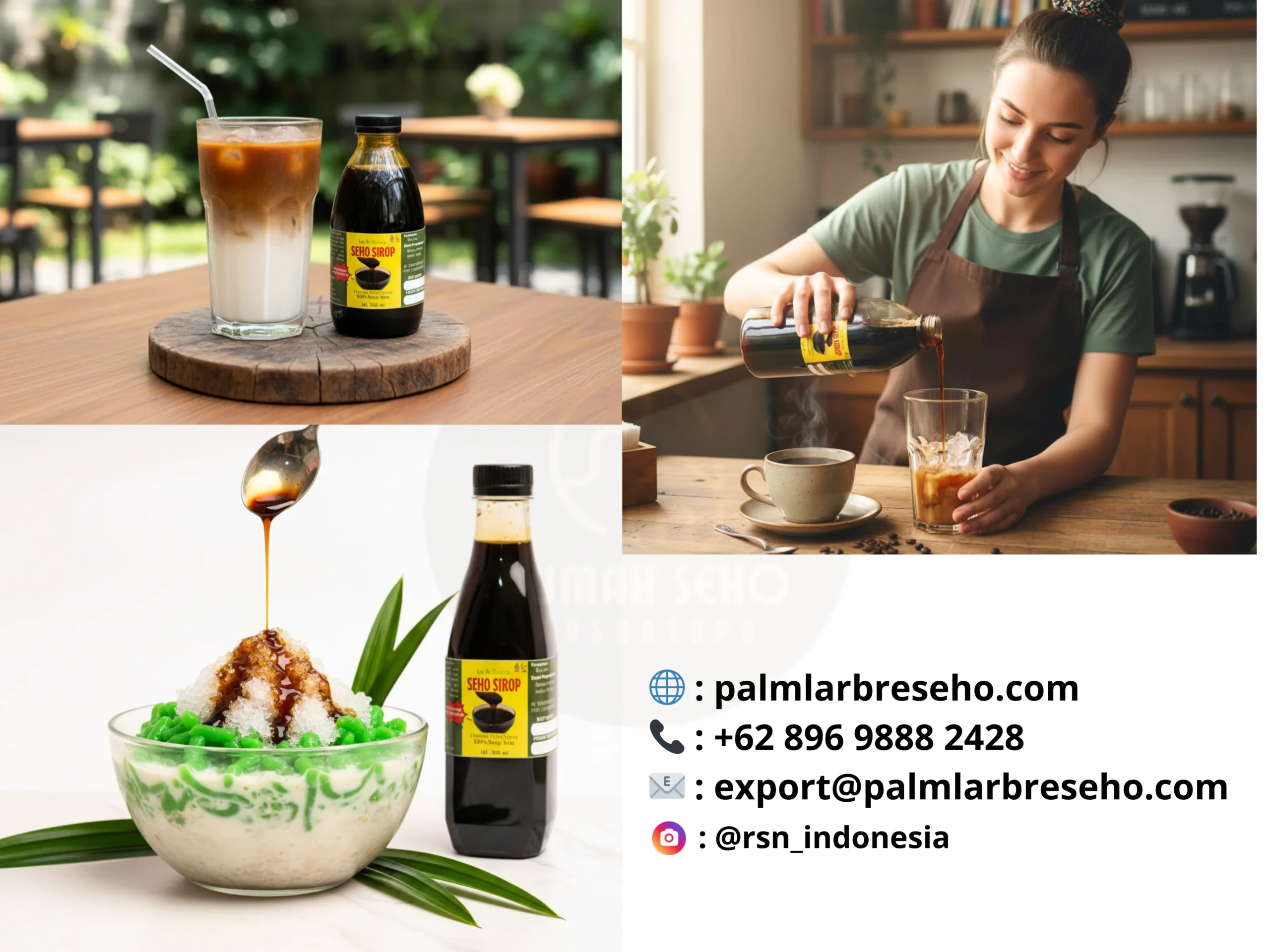
As a manufacturer and exporter of palm sugar from Indonesia, we produce Arenga Palm Syrup from L’Arbre Seho specifically for food and beverage manufacturers requiring reliable quality and export-ready stability.
Our production systems are designed to maintain:
- Stable Brix 70–72
- Ash Content 1.10–1.15%
- Consistent flavor performance
- Controlled production standards
- Long-term product stability
In addition, our Arenga Palm Syrup offers a shelf life of up to 18 months under proper storage conditions.
This combination of stability and consistency helps manufacturers maintain predictable results across beverage, bakery, and food applications.
Brix Is the Hidden Indicator of Quality
Many product characteristics are immediately visible.
Buyers can see color.
They can taste flavor.
They can evaluate packaging.
Brix is different.
It often remains hidden behind the scenes.
Yet its impact extends throughout the entire product lifecycle.
The Brix level in palm syrup production influences stability, shelf life, flavor consistency, export performance, and manufacturing efficiency.
This is why experienced manufacturers treat Brix as one of the most important indicators of quality.
It reveals much more than sweetness.
It reveals how well the product is controlled.
Conclusion
Understanding the importance of the Brix level in palm syrup production is essential for manufacturers seeking reliable ingredient performance.
Brix influences product stability, shelf life, flavor consistency, manufacturing efficiency, and export readiness.
More importantly, consistent Brix reflects consistent production systems.
For food and beverage manufacturers, that consistency translates directly into operational confidence and product quality.
At PT. Rumah Seho Nusantara, our L’Arbre Seho Arenga Palm Syrup is produced with strict Brix control to help manufacturers achieve stable, predictable, and scalable results.
Because in palm syrup production, Brix is not just a number.
It is one of the clearest indicators of quality.
Contact Us
PT. Rumah Seho Nusantara
Manufacturer and Exporter of Palm Sugar from Indonesia
📞 WhatsApp / Contact Person: +62 896 9888 2428
📸 Instagram: @rsn_indonesia
🌐 Website: www.palmlarbreseho.com