Using Palm Syrup in Production Requires More Than Finding a Supplier
The demand for palm syrup continues to grow across the global food and beverage industry.
Manufacturers are increasingly incorporating palm syrup into beverages, bakery products, sauces, desserts, confectionery products, and ready-to-eat foods. The ingredient is valued for its authentic flavor, natural positioning, and versatility across multiple applications.
However, many manufacturers make a critical mistake.
They assume that all palm syrup products perform the same way.
As a result, supplier selection is often based primarily on pricing or sample evaluation. While these factors matter, they rarely provide the full picture.
The reality is that using palm syrup in production successfully requires careful evaluation of three important areas: the supplier, the product itself, and the handling system behind the product.
Ignoring any of these factors can create problems later in manufacturing.
Production inconsistencies, flavor variation, supply interruptions, and operational inefficiencies often begin long before the syrup enters the production line.
Because of this, manufacturers should understand exactly what to evaluate before making a sourcing decision.
The Supplier Is More Important Than the Product Sample
Many manufacturers receive samples from several suppliers before making a purchasing decision.
This is a logical first step.
However, a sample only represents a small snapshot of what a supplier can deliver.
The more important question is whether the supplier can reproduce that same quality consistently over time.
A beverage manufacturer may purchase hundreds of tons annually.
A bakery company may rely on the same ingredient for multiple product lines.
In these situations, consistency becomes far more important than a single successful sample.
Because of this, using palm syrup in production starts with evaluating the supplier’s operational capability.
Manufacturers should ask whether the supplier controls production directly or simply acts as a trader.
A manufacturer typically has greater control over quality, processing standards, inventory planning, and consistency.
A trading company may provide competitive pricing, but often has less control over product variation.
The difference becomes increasingly important as production volume grows.
Process Control Determines Product Consistency
One of the biggest causes of manufacturing inconsistency is poor process control.
Palm syrup is a natural ingredient. Without strong production systems, variability can occur throughout the manufacturing process.
This variability may affect:
- sweetness
- flavor profile
- viscosity
- moisture content
- overall performance
For manufacturers, these changes create operational challenges.
Recipes may require adjustment. Product quality may fluctuate. Customer experiences may become inconsistent.
Because of this, using palm syrup in production requires selecting suppliers that demonstrate strong process control.
Reliable suppliers understand that consistency is not achieved by chance.
It is achieved through controlled production systems, quality monitoring, and standardized processing procedures.
Understanding the Product Is Just as Important
Not all palm syrup is designed for industrial applications.
Some products perform well in traditional food preparation but struggle in large-scale manufacturing environments.
Manufacturers should therefore evaluate whether the syrup is suitable for their intended application.
For example, beverage production requires stable sweetness, predictable flavor performance, and consistent Brix levels.
Bakery applications may prioritize moisture retention and texture support.
Sauce manufacturers often focus on flavor depth and stability.
Because of this, using palm syrup in production successfully requires matching the product to the application.
The best syrup is not necessarily the sweetest syrup.
The best syrup is the one that performs reliably within the production system.
Authentic Flavor Should Never Be Overlooked
One of the main reasons manufacturers choose palm syrup is flavor.
Consumers increasingly seek authentic ingredients and more natural taste experiences.
Palm syrup provides a distinctive flavor profile that differs significantly from refined sugar and many alternative sweeteners.
However, not every syrup delivers the same level of authenticity.
Some products focus primarily on sweetness while sacrificing the rich palm sugar character that makes the ingredient valuable.
This can reduce product differentiation.
Because of this, manufacturers should evaluate flavor carefully before using palm syrup in production.
Authentic flavor creates stronger product identity.
Strong product identity creates stronger market positioning.
Brix Consistency Directly Affects Manufacturing Performance
Among all technical specifications, Brix is one of the most important.
Brix represents the concentration of dissolved solids within the syrup.
Many manufacturers focus on achieving a specific Brix value. However, consistency is often more important than the number itself.
A syrup that fluctuates between shipments creates production challenges.
Sweetness may change.
Viscosity may vary.
Formulation performance may become unpredictable.
Because of this, using palm syrup in production requires evaluating how well a supplier maintains Brix consistency over time.
Stable Brix supports stable manufacturing.
Stable manufacturing supports product consistency.
Shelf Life Reveals Operational Quality
Shelf life is often viewed only as a technical specification.
In reality, shelf life reflects the overall quality of the production process.
Products with strong shelf-life performance are typically produced under controlled conditions.
They benefit from proper concentration management, hygienic processing, and stable handling systems.
Products with weak shelf life often indicate deeper production weaknesses.
Because of this, manufacturers should consider shelf-life performance carefully before using palm syrup in production.
A stable product provides greater flexibility for inventory planning, distribution, and export operations.
Handling Matters More Than Many Manufacturers Realize
Even high-quality syrup can become problematic if handling systems are inadequate.
This is one of the most overlooked aspects of ingredient sourcing.
Manufacturers often focus on the product itself while ignoring how the product is stored, transported, and managed before delivery.
Improper handling may affect:
- product stability
- packaging integrity
- shelf-life performance
- shipment quality
For export markets, handling becomes even more critical.
Products may spend weeks or months moving through logistics networks before reaching their final destination.
Because of this, using palm syrup in production successfully requires evaluating how suppliers manage storage and transportation.
Reliable suppliers understand that quality must be maintained throughout the entire supply chain.
Export Readiness Is Essential for Growing Manufacturers
Many manufacturers begin by serving domestic markets.
Over time, however, growth often leads to export opportunities.
This makes export readiness an important consideration from the beginning.
Suppliers with international experience typically understand:
- documentation requirements
- logistics coordination
- long-distance transportation
- inventory planning
- product stability during shipment
Because of this, manufacturers planning future growth should consider export capability before using palm syrup in production.
Choosing the right supplier today can prevent operational challenges tomorrow.
Communication Is Part of Product Reliability
Many sourcing problems begin with poor communication.
A delayed shipment update can disrupt production planning.
An unclear specification discussion can create formulation challenges.
A lack of transparency can damage trust.
Because of this, communication should be evaluated alongside product quality.
Reliable suppliers communicate clearly, proactively, and consistently.
They provide accurate information regarding production schedules, inventory availability, and shipment timelines.
For manufacturers, this communication reduces uncertainty and improves planning.
This is another reason why using palm syrup in production involves much more than selecting an ingredient.
It involves selecting a reliable business partner.
PT. Rumah Seho Nusantara: Built for Industrial Manufacturing
At PT. Rumah Seho Nusantara, we understand what manufacturers need before integrating palm syrup into production systems.
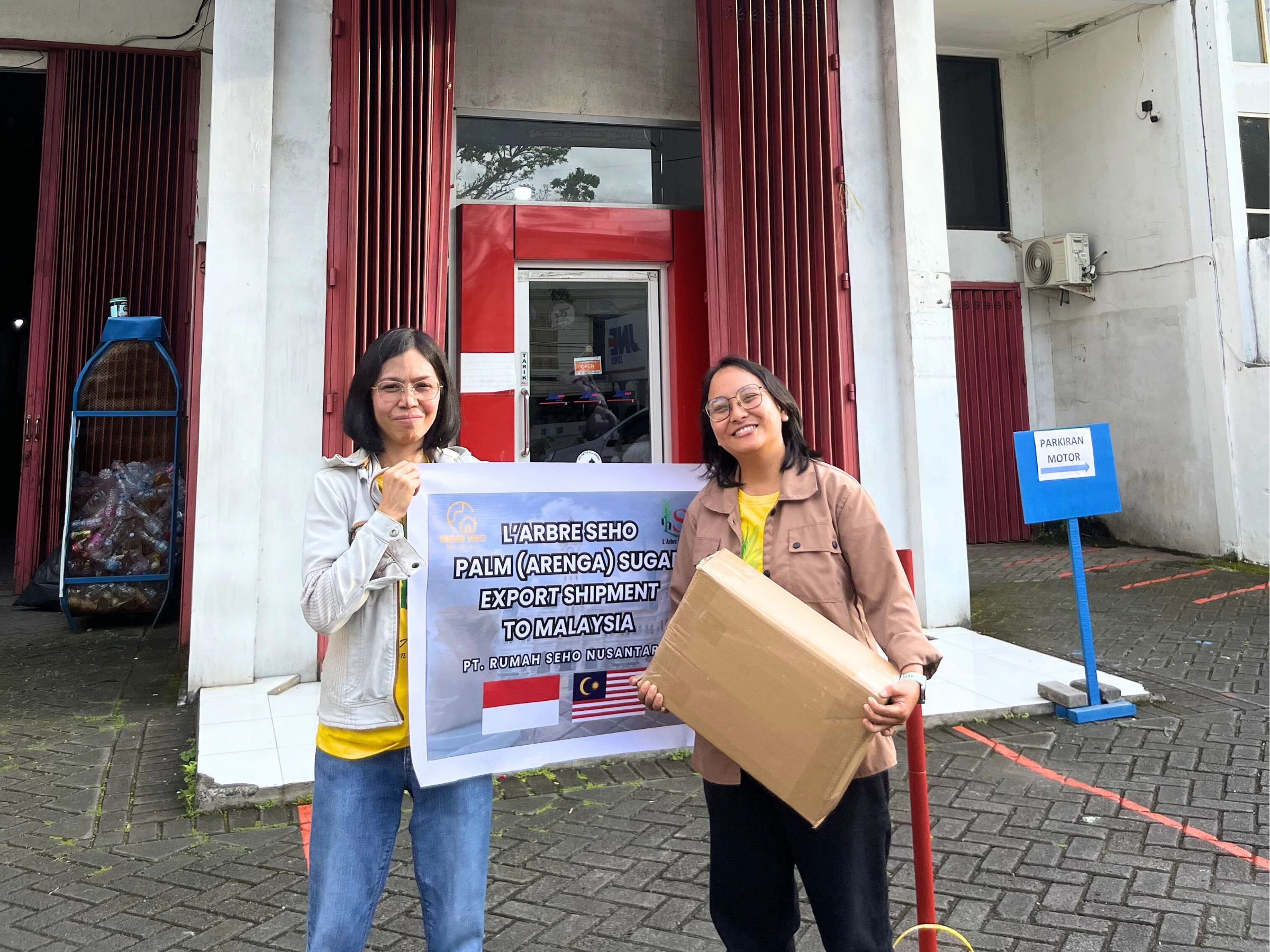
As a manufacturer and exporter of palm sugar from Indonesia, we produce Arenga Palm Syrup from L’Arbre Seho specifically for industrial food and beverage applications.
Our production systems are designed around consistency, reliability, and export readiness.
We maintain:
- Stable Brix 70–72
- Ash Content 1.10–1.15%
- Authentic Arenga palm flavor
- Hygienic production standards
- Controlled quality systems
In addition, our Arenga Palm Syrup offers shelf life up to 18 months under proper storage conditions.
Our handling systems are designed to support international distribution while maintaining product integrity throughout the supply chain.
Because of this, manufacturers can integrate our syrup into production with greater confidence.
The Right Supplier Makes Production Easier
Manufacturers often focus on ingredients.
The most successful manufacturers focus on systems.
A reliable supplier contributes to:
- stable production
- predictable quality
- consistent flavor
- efficient operations
- long-term growth
These benefits extend far beyond the ingredient itself.
Because of this, using palm syrup in production should never be viewed as a simple purchasing decision.
It is a strategic decision that affects product quality, operational efficiency, and business performance.
Conclusion
Understanding the realities of using palm syrup in production is essential for manufacturers seeking long-term success.
The decision involves much more than selecting a sweetener.
Manufacturers must evaluate supplier capability, product consistency, authentic flavor, process control, handling systems, and export readiness.
These factors determine whether palm syrup becomes a valuable production asset or a source of operational challenges.
At PT. Rumah Seho Nusantara, we believe successful manufacturing begins with reliable ingredients and reliable partners.
That is why our L’Arbre Seho Arenga Palm Syrup is developed to support consistent production, authentic flavor, and scalable growth for food and beverage manufacturers worldwide.
Contact Us
PT. Rumah Seho Nusantara
Manufacturer and Exporter of Palm Sugar from Indonesia
📞 WhatsApp / Contact Person: +62 896 9888 2428
📸 Instagram: @rsn_indonesia
🌐 Website: www.palmlarbreseho.com