How to Read a Palm Sugar Certificate of Analysis
When sourcing palm sugar for food manufacturing or international trade, product quality must be supported by more than a supplier’s description. Buyers need reliable information to determine whether an ingredient meets their technical requirements and is suitable for their intended application.
One important document is the Certificate of Analysis (COA). It provides analytical results for specified quality parameters and helps buyers evaluate a product against agreed specifications.
However, reading a palm sugar COA can be challenging if you are unfamiliar with laboratory terminology, measurement units, or acceptance limits. A result may look precise but still require context before you can decide whether the product meets your requirements.
Whether you purchase granulated palm sugar, solid palm sugar, or palm syrup, understanding the COA can help you make more informed sourcing decisions. Here is what food manufacturers, importers, and distributors should know.
1. Understand What a Certificate of Analysis
A Certificate of Analysis is a document that reports test results for specified characteristics of a product or sample. Depending on the supplier and testing arrangement, it may be issued by a manufacturer, an internal quality control laboratory, or an external laboratory.
For palm sugar buyers, the COA can help verify selected characteristics of the ingredient, such as moisture content, ash content, soluble solids concentration, or certain contaminants.
However, a COA does not automatically prove that a product meets every possible quality or food safety requirement. Its value depends on the parameters tested, the methods used, the sample represented, and the applicable acceptance criteria.
For example, a COA that reports Brix and ash content does not necessarily provide evidence about microbiological quality if no microbiological tests were performed.
Therefore, start by identifying the purpose of the document. Check whether it relates to the specific palm sugar product you intend to purchase and whether it contains the information needed for your application.
2. Check the Product Identity and Batch Information
Before reviewing individual test results, confirm that the COA identifies the correct product.
A useful COA should provide enough information to connect the reported results to the product or batch being evaluated. Depending on the document, this information may include the product name, batch or lot number, production date, sample identification, testing date, and issuing organization.
These details matter because palm sugar products can have different physical characteristics and specifications. Granulated palm sugar, solid palm sugar, and liquid palm syrup should not automatically be evaluated using identical criteria.
For example, a buyer sourcing palm syrup should confirm that the COA applies to the liquid product rather than a different palm sugar variant.
Next, compare the batch number on the COA with the relevant product label or shipping documentation when applicable. If the identifiers do not match, ask the supplier for clarification before relying on the results.
Additionally, review the date of testing and the date of issue. These dates help establish when the analysis occurred, although they do not independently determine whether the product remains suitable for use.
Correct identification is the first step in connecting laboratory results to the material you will actually receive.
3. Understand the Difference Between Specifications and Test Results
One of the most important parts of reading a palm sugar COA is distinguishing the specification from the actual result.
A specification defines the required or acceptable range for a particular parameter. A test result reports what was measured in the sample.
For example, a hypothetical COA might show the following:
| Parameter | Specification | Test result |
|---|---|---|
| Moisture content | Maximum 3.0% | 2.4% |
| Ash content | Maximum 2.0% | 1.2% |
| Brix for palm syrup | Minimum 70°Bx | 71°Bx |
These figures are illustrative only, not universal palm sugar standards or verified specifications for a particular product.
In this example, moisture and ash content fall below their stated maximum limits, while the Brix result exceeds its stated minimum. Based on these three criteria alone, the results meet the listed limits.
However, the buyer should still check the remaining specifications and confirm that the limits are appropriate for the intended product and application.
Also, not every parameter uses a maximum or minimum limit. Some specifications require a range, while others use descriptive criteria or specific analytical requirements.
Therefore, do not judge a result simply because its number appears high or low. First, understand what the parameter measures and how the specification defines acceptance.
4. Learn the Key Parameters in a Palm Sugar COA
The parameters reported in a COA depend on the product form, intended application, buyer requirements, and testing program. The following are examples of characteristics that may be relevant.
Moisture content
Moisture content indicates the amount of water present in a product, usually expressed as a percentage by mass.
For granulated palm sugar, moisture can influence clumping, flow properties, storage behavior, and handling. For solid palm sugar, it may affect texture and stability.
However, the acceptable moisture level depends on the specific product. Buyers should use the agreed specification rather than assuming that one limit applies to all palm sugar forms.
Ash content
Ash content represents the inorganic residue remaining after a sample undergoes a specified analytical process. It can provide information about the product’s mineral residue and may be used as one indicator of composition or processing consistency.
Nevertheless, ash content alone does not establish overall product quality, purity, or food safety. It must be interpreted alongside other relevant parameters.
Brix
Brix is commonly used to express soluble solids concentration in liquid products. It is particularly relevant when evaluating palm syrup.
For example, a buyer may use a specified Brix range to assess whether a syrup meets the concentration requirements for a beverage or food formulation.
However, Brix is not a complete measure of syrup quality. It does not independently establish flavor, microbial stability, or the concentration of every individual sugar.
For reliable comparison, check the stated measurement method and conditions where applicable.
Heavy metals and contaminants
Depending on the product, destination market, and buyer requirements, the COA or accompanying laboratory reports may include tests for contaminants such as lead, cadmium, arsenic, or mercury.
Pay attention to the reported units, analytical method, applicable legal or contractual limits, and laboratory reporting format.
Results reported as less than a detection or quantification limit should not automatically be interpreted as zero. They indicate that the measured amount was below the stated reporting threshold.
Furthermore, meeting one contaminant limit does not establish compliance with every food safety requirement in the destination market.
Microbiological parameters
Depending on the intended use and risk assessment, buyers may require microbiological testing. The relevant tests may differ according to the product form and application.
If the COA does not include microbiological results, do not assume that the product has passed those tests. Request the relevant supporting documents when they are necessary for your purchasing requirements.
5. Pay Attention to Units, Methods, and Reporting Limits
A number is only meaningful when you understand how it was measured and reported.
For example, a contaminant result may be expressed in milligrams per kilogram (mg/kg), while moisture and ash content are commonly expressed as percentages. Brix is generally reported in degrees Brix (°Bx).
These units are not interchangeable. Comparing two results without checking their units can lead to incorrect conclusions.
The analytical method also matters. Different methods may have different performance characteristics, and the method specified in a buyer’s requirements may be important for determining acceptance.
In addition, understand terms such as LOD and LOQ. The limit of detection (LOD) relates to the smallest amount a method can reliably detect under defined conditions. The limit of quantification (LOQ) relates to the level at which the method can quantify an amount with specified performance.
For example, a result reported as “less than 0.01 mg/kg” should be interpreted according to the laboratory’s reporting convention and the applicable acceptance limit.
If a result appears close to a specification limit, ask the supplier or laboratory whether measurement uncertainty, rounding, or the analytical method affects the interpretation.
6. Verify the Laboratory and the Scope of the Document
A COA is more useful when its origin and scope are clear. Check who issued the document, whether the laboratory is identified, and whether the reported tests are appropriate for your requirements.
Where independent testing is important, consider whether the laboratory has suitable accreditation for the relevant methods and parameters. Accreditation should be verified within its actual scope rather than assumed to cover every test the laboratory performs.
Also, distinguish between a manufacturer’s internal quality report and a report issued by an independent laboratory. Both may provide useful information, but buyers may have different documentation requirements depending on their quality assurance procedures or customer contracts.
If the COA contains unclear product identifiers, missing units, unexplained results, or specifications without a stated basis, request clarification.
For larger purchases, it may also be appropriate to agree on a sampling procedure, acceptance criteria, and a process for handling results that do not meet specifications.
These steps help make the COA part of a documented quality assurance process rather than simply a document collected during purchasing.
7. Use the COA to Compare Palm Sugar Suppliers
When evaluating multiple palm sugar suppliers, use a consistent checklist. Comparing documents becomes difficult when each supplier reports different parameters, uses different units, or provides results without clear acceptance limits.
Begin by identifying the specifications that matter most to your product. A biscuit manufacturer may prioritize moisture, particle size, flavor, and other formulation requirements. A beverage producer purchasing palm syrup may focus on Brix, viscosity, sensory characteristics, and relevant safety parameters.
Next, compare each supplier’s reported results against the same agreed criteria. Where important information is missing, request clarification or additional testing rather than assuming that the products are equivalent.
Price should also be evaluated alongside quality consistency, documentation, packaging, delivery reliability, and total purchasing cost.
Remember that a COA is only one part of supplier assessment. Product samples, production controls, traceability, and performance during manufacturing trials can provide additional evidence about suitability.
Ultimately, the objective is not simply to find a supplier with an acceptable COA. It is to identify a product that meets your requirements consistently and performs reliably in your production process.
Why COA Understanding Matters When Sourcing Indonesian Palm Sugar
For food manufacturers and importers, understanding a palm sugar COA can support better purchasing decisions and clearer communication with suppliers. It also helps buyers identify which product characteristics need to be verified before approving an ingredient for commercial production.
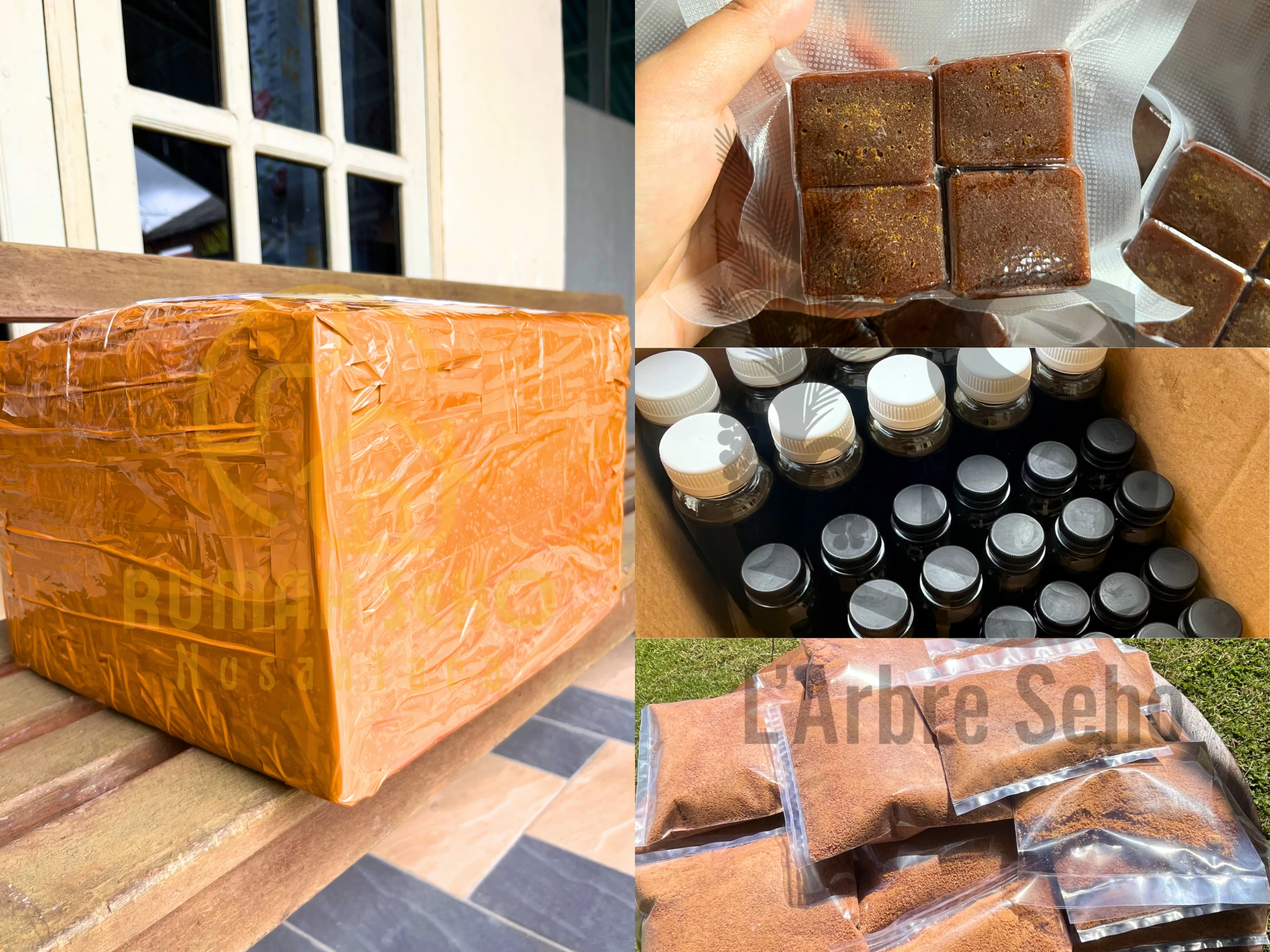
L’Arbre Seho, a brand of PT. Rumah Seho Nusantara, offers Seho Granule, Seho Solide, and Seho Sirop made from Arenga palm sap. Each product form has different characteristics and may require different quality parameters depending on its intended application.
When evaluating these products, buyers should request the relevant specifications and available supporting documentation for the specific product being considered. The required tests and acceptance criteria should match the buyer’s formulation, quality assurance procedures, and destination market requirements.
As a manufacturer and exporter of Indonesian palm sugar, PT. Rumah Seho Nusantara recognizes the importance of clear product information in business-to-business sourcing. Buyers can use documented specifications, product trials, and appropriate quality checks to assess whether an ingredient meets their operational needs.
Conclusion
Reading a palm sugar Certificate of Analysis requires more than checking whether a number looks acceptable. Buyers need to confirm product identity, understand the difference between specifications and test results, interpret relevant quality parameters, check units and analytical methods, and verify that the document covers their actual requirements.
PT. Rumah Seho Nusantara, through its L’Arbre Seho brand, offers Seho Granule, Seho Solide, and Seho Sirop for businesses exploring Indonesian palm sugar. By reviewing the appropriate product documentation and conducting application-specific evaluations, food manufacturers and importers can make more informed sourcing decisions and establish clearer quality expectations with their suppliers.
Contact Us
PT. Rumah Seho Nusantara
- Website: www.palmlarbreseho.com
- Email: export@palmlarbreseho.com
- WhatsApp: +62 896 9888 2428
- Instagram: @rsn_indonesia
Contact us to learn more about our palm sugar products and discuss product specifications and potential applications for your food manufacturing or importing business.