How to Build an Effective Incoming Ingredient Inspection Process
Food product quality begins long before ingredients enter the production line. Every raw material contributes to the final product, which means a problem with an incoming ingredient can affect flavor, texture, safety, production efficiency, and customer satisfaction.
For food manufacturers, receiving ingredients is therefore more than checking quantities and signing delivery documents. Businesses need a structured incoming ingredient inspection process to verify that raw materials meet their specifications before they are approved for production.
For example, a manufacturer using palm sugar in cookies or beverages may receive a delivery that looks acceptable but differs in moisture content, particle size, flavor, or soluble solids concentration. If the variation goes unnoticed, it may affect the formulation and create inconsistencies in the finished product.
An effective inspection system helps identify these issues early. By combining document reviews, physical inspections, appropriate testing, and clear acceptance procedures, manufacturers can protect product quality and reduce avoidable production risks.
1. Establish Clear Raw Material Specifications
The first step in building an incoming ingredient inspection process is defining what acceptable raw materials look like.
Without clear specifications, quality control staff may rely on subjective judgments. One employee might consider an ingredient acceptable based on its appearance, while another may reject the same material because it looks different from previous deliveries.
To prevent this problem, establish documented specifications for every important ingredient. Depending on the product, these requirements may cover appearance, color, aroma, moisture content, particle size, composition, microbiological criteria, and relevant contaminant limits.
For example, a manufacturer purchasing granulated palm sugar may need specifications for moisture, particle size, and sensory characteristics. Meanwhile, a beverage manufacturer using palm syrup may focus on Brix, viscosity, flavor profile, and other application-specific parameters.
However, not every parameter applies to every ingredient. The specifications should reflect the formulation, production process, applicable regulations, and intended use.
In addition, define acceptable limits and the methods used to evaluate them. Clear requirements give suppliers and inspection teams a shared reference point when assessing incoming deliveries.
2. Review Delivery Documents Before Approving the Ingredients
Documentation provides important information about the identity, origin, and quality of incoming materials. Therefore, document verification should be part of the receiving procedure.
Start by checking the purchase order, delivery note, product label, and other relevant shipping documents. Confirm that the product name, quantity, packaging format, and supplier information match the order.
Where required, request and review the product specification sheet and Certificate of Analysis (COA). A specification sheet describes the product’s expected characteristics, while a COA reports analytical results for specified parameters in a particular sample or batch.
For example, if your production process requires palm syrup within an agreed Brix range, the relevant documentation may help you verify whether the reported result meets that requirement.
Nevertheless, a COA should not be treated as proof that every possible quality or food safety parameter has been verified. Review which tests were performed, the reported units, the acceptance limits, and the batch identification.
If documents are missing, inconsistent, or unclear, hold the ingredient for review when required by your procedure. Do not approve a delivery solely because the supplier is familiar or the product has been purchased before.
3. Inspect Packaging and Physical Condition
After reviewing the documents, inspect the incoming delivery for visible signs of damage, contamination, or handling problems.
Check whether the packaging is intact, properly sealed where applicable, correctly labeled, and suitable for the ingredient. Look for leaks, tears, broken seals, moisture damage, or evidence that the material may have been exposed to unsuitable conditions.
For granulated palm sugar, inspect the packaging for damage and signs of moisture exposure. Depending on the product and storage conditions, unexpected clumping may indicate a need for further evaluation.
For palm syrup, check the container for leaks, damaged closures, or other signs of compromised packaging.
Also, confirm that the quantity received matches the purchase documentation. Record any discrepancies before the delivery is fully accepted.
Importantly, visual inspection cannot confirm every aspect of ingredient quality or food safety. A product may look normal while still failing a chemical, microbiological, or other technical requirement.
Therefore, use physical inspection as one layer of the inspection process rather than the only basis for approval.
4. Develop a Risk-Based Sampling and Testing Plan
Testing every parameter of every delivery may be impractical. However, accepting all ingredients without testing can expose the business to unnecessary risk.
A risk-based sampling plan helps determine what should be tested, how frequently testing should occur, and when additional verification is necessary.
Consider factors such as the ingredient’s role in the formulation, potential food safety hazards, supplier history, variability between deliveries, and the consequences of a quality failure.
For example, a critical ingredient with a history of inconsistent quality may require more frequent verification than a stable ingredient supplied by a consistently performing supplier.
For palm sugar, relevant checks may include moisture testing for granulated products, Brix measurement for palm syrup, sensory evaluation, or other analyses required by the agreed specifications.
However, testing methods must be suitable for the parameter being evaluated. A handheld refractometer may help measure Brix in a liquid, but it cannot replace laboratory testing for contaminants or microbiological hazards.
Sampling procedures also matter. A sample must represent the material being assessed as closely as practical. For large deliveries, follow a documented sampling method appropriate to the ingredient, packaging, and quality requirements.
If a result is outside the acceptable limits, follow the established investigation and disposition procedure before using the ingredient in production.
5. Define Clear Acceptance, Rejection, and Quarantine Procedures
An inspection process becomes effective only when employees know what to do with the results.
Manufacturers should establish clear rules for three possible outcomes: acceptance, rejection, and quarantine pending further review.
Acceptance means the ingredient meets the applicable requirements and is approved for use.
Rejection means the ingredient fails defined acceptance criteria and cannot be used under the applicable procedure.
Quarantine means the ingredient is temporarily held while the quality team investigates an issue, requests additional documentation, or conducts further testing.
For example, a palm sugar delivery may arrive with the correct quantity but without a required batch-specific COA. Depending on the company’s procedures and purchasing requirements, the material may need to remain on hold until the missing information is reviewed.
Similarly, if a laboratory result falls outside the agreed specification, the quality team should investigate the result and determine the appropriate disposition.
Clearly identify held or rejected materials to prevent accidental use. If your business uses an inventory management system, record the material’s status so purchasing, warehouse, and production teams receive consistent information.
These procedures reduce the risk of unapproved ingredients entering the production line.
6. Maintain Traceability and Inspection Records
Inspection records help manufacturers understand what they received, which checks were performed, and whether the material was approved.
For each delivery, record the relevant information, including supplier name, product name, batch or lot number, receipt date, quantity, inspection results, document status, and final disposition.
Where applicable, retain the COA, photographs of damaged packaging, laboratory reports, and records of any corrective actions.
Traceability becomes particularly important when a quality issue appears after production. If a batch of finished products develops an unexpected flavor or texture, the manufacturer can review ingredient records to identify which raw materials were used.
For example, batch records may reveal that several affected production runs used palm sugar from the same delivery. This information can help the quality team investigate whether the ingredient contributed to the problem.
Furthermore, inspection records provide evidence for internal audits, supplier evaluations, and quality improvement activities.
A simple, consistently maintained record system is often more useful than a complicated system that employees do not update correctly.
7. Evaluate Supplier Performance Regularly
Incoming inspection should also help manufacturers determine whether suppliers consistently meet their requirements.
Track supplier performance over time using indicators such as delivery conformity, document completeness, inspection failures, recurring defects, response time, and delivery reliability.
For instance, if a supplier repeatedly delivers granulated palm sugar that does not meet the agreed particle size specification, the purchasing and quality teams should investigate the recurring issue.
The appropriate response may include requesting corrective action, increasing inspection frequency, reviewing the specification, or reassessing the supplier’s approval status.
However, distinguish between isolated incidents and recurring patterns. A single discrepancy may require investigation, while repeated failures may indicate a more fundamental problem with the supplier’s process or communication.
In addition, communicate quality expectations before placing regular orders. Suppliers should understand the applicable specifications, documentation requirements, and procedures for handling nonconforming materials.
Regular supplier reviews help manufacturers move from simply detecting problems to preventing them.
8. Train Employees and Review the Process
Even a well-designed inspection procedure can fail if employees do not understand how to apply it.
Train receiving staff, warehouse personnel, quality control teams, and purchasing employees on their respective responsibilities. They should know how to verify documents, inspect packaging, identify discrepancies, record results, and escalate concerns.
Provide clear work instructions and practical checklists. For example, a receiving checklist can include product identity, quantity, packaging condition, batch identification, required documents, and inspection status.
Moreover, make sure employees understand which decisions they can make independently and which require approval from the quality team.
Review the process regularly using inspection records, supplier performance, production complaints, and audit findings. If repeated problems occur, investigate whether the issue comes from unclear specifications, inadequate sampling, poor supplier communication, or insufficient training.
As the business grows, the inspection system should adapt to new ingredients, suppliers, production volumes, and customer requirements.
A well-maintained process helps ensure that incoming inspection remains practical, consistent, and relevant to manufacturing operations.
Why Incoming Inspection Matters When Sourcing Indonesian Palm Sugar
For manufacturers using palm sugar, incoming inspection helps confirm whether a delivery meets the requirements established for the intended application.
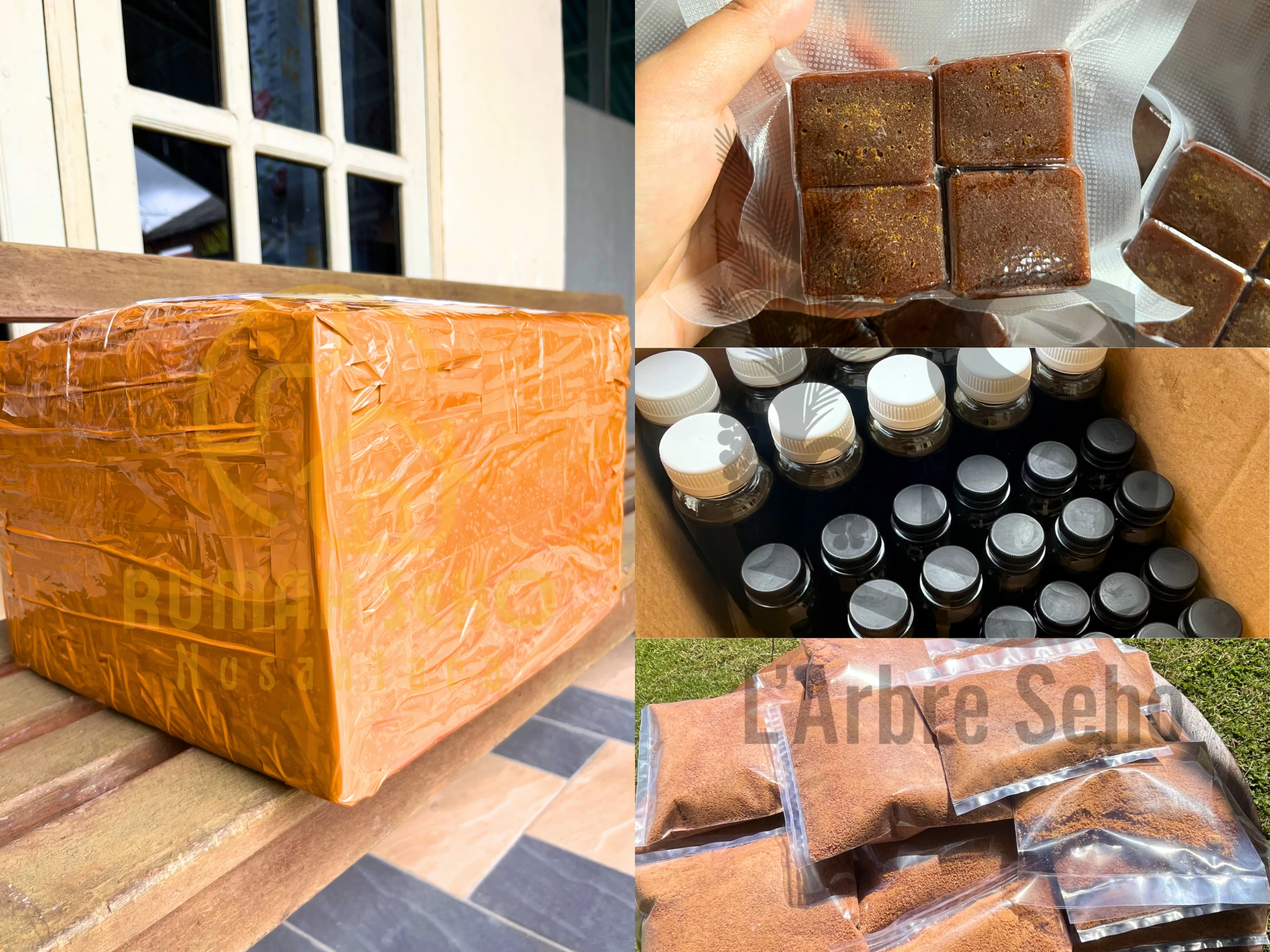
L’Arbre Seho, a brand of PT. Rumah Seho Nusantara, offers Seho Granule, Seho Solide, and Seho Sirop made from Arenga palm sap. Each product form may require different inspection criteria depending on its characteristics and intended use.
For example, a manufacturer using granulated palm sugar may prioritize packaging integrity, moisture, particle size, and sensory characteristics. A business using palm syrup may focus on container condition, Brix, flavor, and other relevant specifications.
Buyers should identify the parameters that matter to their formulation, request applicable product information, and verify the delivery according to their own quality procedures. Additional testing may be necessary when required by the specification, risk assessment, customer requirements, or destination-market regulations.
As a manufacturer and exporter of Indonesian palm sugar, PT. Rumah Seho Nusantara works with business buyers exploring different palm sugar applications. Clear specifications and appropriate incoming checks help both suppliers and manufacturers establish better expectations for product quality.
Conclusion
An effective incoming ingredient inspection process protects food manufacturing operations by verifying raw material identity, checking documentation, inspecting packaging, applying appropriate testing, and defining clear acceptance procedures.
To make the process effective, establish measurable specifications, use risk-based sampling, maintain traceability, train employees, and review supplier performance regularly. These practices help identify problems before ingredients enter production and support consistent finished-product quality.
PT. Rumah Seho Nusantara, through its L’Arbre Seho brand, offers Seho Granule, Seho Solide, and Seho Sirop for businesses exploring Indonesian palm sugar. By reviewing the relevant product information and evaluating each delivery against established requirements, food manufacturers can make more informed sourcing decisions and maintain better control over their production processes.
Contact Us
PT. Rumah Seho Nusantara
- Website: www.palmlarbreseho.com
- Email: export@palmlarbreseho.com
- WhatsApp: +62 896 9888 2428
- Instagram: @rsn_indonesia
Contact us to learn more about our palm sugar products and discuss their potential applications for your food manufacturing business.