Introduction: The Moment Everything Goes Wrong
A shipment arrives.
At first, everything looks normal. The containers are intact. The documentation is complete. However, once the product is opened, something feels off.
Gas pressure releases. The aroma shifts. The flavor no longer matches expectations.
At that moment, the reality becomes clear.
You are dealing with a fermented palm syrup shipment.
For many importers, this situation represents more than a quality issue. It disrupts production schedules, increases operational costs, and risks customer trust.
Therefore, understanding why fermentation happens—and how to prevent it—becomes essential.
What Actually Happens During Fermentation
Fermentation occurs when microorganisms metabolize sugars and produce by-products such as gas, acids, and alcohol compounds.
Palm syrup, being a natural sweetener rich in sugars, provides an environment where this process can occur if conditions allow.
Once fermentation begins:
- carbon dioxide gas forms
- internal pressure increases
- flavor shifts toward sour or alcoholic notes
- viscosity may change
- product stability declines
As a result, the syrup becomes unsuitable for industrial use.
Therefore, a fermented palm syrup shipment is not just a minor defect—it is a complete performance failure.
Why Fermentation Happens During Shipping
Fermentation does not start randomly.
Instead, it develops when several risk factors align.
These include:
- residual microbial presence
- elevated moisture levels
- temperature fluctuations
- oxygen exposure
- extended transit duration
During ocean freight, shipments may take 30–45 days.
Within this timeframe, even small instability can develop into full fermentation.
Therefore, preventing a fermented palm syrup shipment requires controlling these variables from the beginning.
The Critical Role of Shelf Life
Shelf life represents the product’s ability to remain stable over time.
For palm syrup, shelf life is not just a label—it reflects how well the product resists microbial activity and maintains its characteristics.
A short or unstable shelf life indicates weak process control.
On the other hand, a well-controlled product can maintain stability for extended periods.
However, shelf life depends on multiple factors:
- moisture content
- Brix stability
- hygienic processing
- packaging integrity
Therefore, shelf life becomes a direct indicator of product quality.
A fermented palm syrup shipment often reveals that shelf life was not properly secured.
The Misconception: Fermentation Means Poor Quality
Many buyers assume that fermentation automatically indicates poor product quality.
However, this interpretation is incomplete.
In reality, fermentation can also signal something important:
👉 the absence of chemical preservatives.
Palm syrup that contains preservatives may resist microbial activity artificially.
In contrast, natural palm syrup without additives relies entirely on process control for stability.
Therefore, when fermentation occurs under poor control, it highlights a system failure—not necessarily the absence of preservatives.
Thus, a fermented palm syrup shipment can reveal whether a product is truly natural.
The Real Challenge: Stability Without Preservatives
Producing palm syrup without preservatives requires advanced control.
Manufacturers must rely on:
- precise evaporation
- controlled moisture levels
- strict hygiene
- consistent concentration
- protective packaging
Each factor must work together.
Without this integration, fermentation risk increases.
Therefore, achieving long shelf life without preservatives becomes a technical challenge.
Only experienced producers can meet this standard.
Why Most Suppliers Fail to Control Fermentation
Many suppliers focus on basic specifications.
They may achieve acceptable Brix or moisture levels at a single point in time.
However, they often lack system-wide control.
As a result:
- moisture distribution may be uneven
- microbial contamination may remain
- packaging may not be optimized
During shipping, these weaknesses become visible.
Therefore, a fermented palm syrup shipment often reflects gaps in process control.
The Financial and Operational Impact
Fermentation creates immediate consequences.
Importers may face:
- rejected shipments
- production delays
- additional logistics costs
- reputational damage
In some cases, entire production schedules must be adjusted.
Therefore, preventing a fermented palm syrup shipment is not optional.
It is essential for maintaining operational stability.
How to Prevent Fermentation in Palm Syrup Shipments
Preventing fermentation requires a system-based approach.
Importers should evaluate the following:
1. Supplier Process Control
Ensure the supplier manages production from raw sap to final packaging.
2. Moisture Management
Verify that moisture levels are controlled and evenly distributed.
3. Brix Stability
Confirm consistent concentration across batches.
4. Hygiene Standards
Ensure strict sanitation throughout production.
5. Packaging Quality
Use sealed, food-grade containers that limit oxygen exposure.
6. Shipping Readiness
Confirm that the product is designed to withstand long transit periods.
Through these steps, the risk of a fermented palm syrup shipment can be significantly reduced.
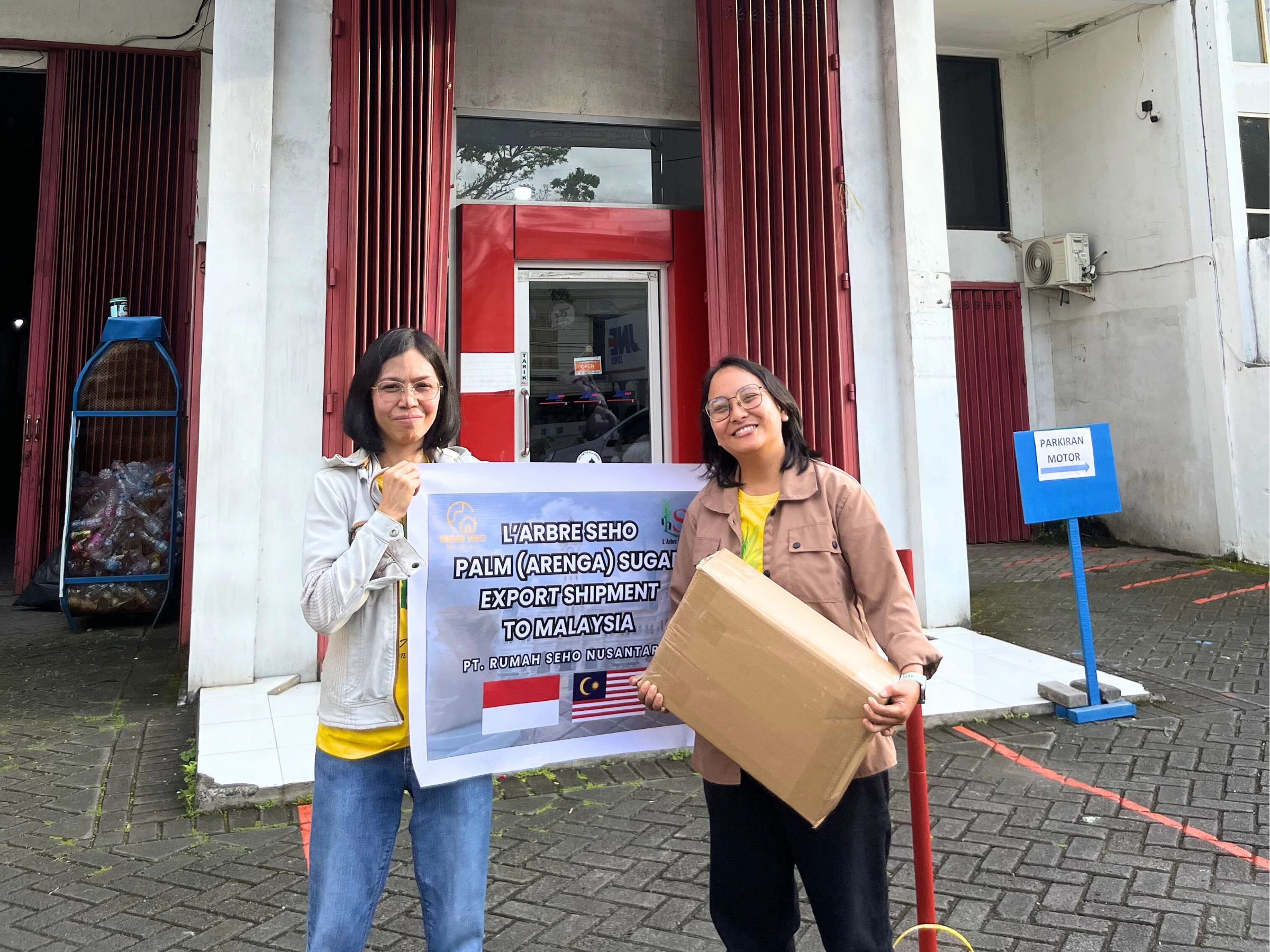
PT Rumah Seho Nusantara: Stability Without Preservatives
At PT Rumah Seho Nusantara, we approach palm syrup production as a controlled system.
As a premium palm (Arenga) syrup manufacturer and supplier from Indonesia, we specialize in producing stable syrup without using preservatives.
We control every stage of production:
- hygienic sap handling
- precise evaporation
- controlled moisture levels
- consistent concentration
- secure packaging
We maintain measurable specifications:
Moisture: Max 25%
Fat Content: Max 2.5%
Ash Content: 1.10 – 1.15%
Through this integrated approach, we achieve:
- stable product performance
- reduced fermentation risk
- consistent quality across batches
Importantly, our palm syrup maintains a shelf life of up to 18 months without preservatives.
This capability reflects process mastery, not chemical intervention.
Because of this, our partners can rely on stable shipments even during long-distance transport.
Conclusion: Fermentation Is a Signal, Not Just a Problem
A fermented palm syrup shipment represents more than a failed product.
It reveals weaknesses in process control, moisture management, and supplier capability.
At the same time, it highlights an important truth.
Natural products without preservatives require advanced systems to remain stable.
Therefore, the goal is not to eliminate fermentation through additives.
Instead, the goal is to prevent it through control.
Manufacturers and importers who understand this distinction can make better sourcing decisions.
Ultimately, stability defines quality—and control defines stability.
Contact Us
For more information about our palm (Arenga) syrup and export-ready supply:
🌐 Website: www.palmlarbreseho.com
📞 Phone / WhatsApp: +62 896 9888 2428