How Palm Syrup Travels Safely Across Global Supply Chains
A Quality Product Must Survive More Than Production
Producing high-quality palm syrup is only the beginning.
For international buyers, the real challenge continues after the product leaves the factory. Palm syrup may travel through warehouses, ports, trucks, containers, and international shipping routes before finally arriving at the customer’s facility.
This journey can take weeks.
During that time, the product may experience changes in temperature, movement, handling, and storage conditions. If packaging and export preparation are not managed properly, these factors can create risks for both the product and the buyer.
That is why safe palm syrup global supply chains require more than simply filling a container and sending it overseas.
Product quality must be protected throughout the entire journey.
From the selection of packaging to container loading and shipment planning, every stage plays a role in helping palm syrup arrive in good condition and ready for its intended application.
Safe Shipping Begins Before the Product Enters the Container
Export safety does not begin at the port.
It begins during production and packaging.
A high-quality palm syrup should first be produced under controlled and hygienic conditions. Once the product reaches its required specifications, it must be packed in suitable food-grade packaging that can support the demands of transportation and handling.
The packaging acts as the first line of protection.
For bulk shipments, manufacturers may use suitable containers such as food-grade jerrycans or other export-oriented bulk packaging, depending on the buyer’s requirements and shipment volume.
The objective is clear: the product should remain securely contained while being transported across multiple points in the supply chain.
For safe palm syrup global supply chains, packaging selection must consider more than capacity. It must also consider product compatibility, closure security, handling conditions, and the realities of long-distance transportation.
Packaging Protects Product Quality During Transit
International shipping exposes products to physical movement.
Containers may be transported by truck, handled at ports, loaded onto vessels, and moved again after arriving in the destination country.
Without proper packaging, this movement can increase the risk of leakage or physical damage.
This is why export packaging must be selected carefully.
A properly designed packaging system helps protect the palm syrup from external contamination and reduces the possibility of product loss during handling.
Secondary protection is also important.
Cartons, pallets, wrapping, and appropriate cargo arrangement can help stabilize the shipment and reduce unnecessary movement during transportation.
For exporters, the goal is not simply to ship the product.
The goal is to ensure that the product reaches the buyer in a condition that reflects the quality promised before shipment.
Container Loading Is Part of Product Protection
A shipping container is not simply an empty space for cargo.
How products are arranged inside the container can influence their condition during transportation.
Poor loading practices may create unnecessary pressure on packaging or allow products to shift during movement.
For this reason, safe palm syrup global supply chains require careful attention to cargo arrangement.
The shipment should be organized to support stability during transport. Packaging should be positioned and secured appropriately based on the type of container and packaging system being used.
The exporter must also consider the total weight distribution.
A well-planned shipment is easier to handle and reduces unnecessary risks during the logistics process.
Attention to these details demonstrates the difference between simply exporting a product and managing an export-ready supply chain.
Long Shipping Times Require Better Preparation
International shipping can take several weeks.
Depending on the destination, routing, port conditions, and logistics arrangements, a shipment may remain in transit for an extended period before reaching the buyer.
For palm syrup suppliers, this means that product stability must be considered before the shipment begins.
The product should be prepared with an appropriate shelf life and packaged according to its intended transportation conditions.
Reliable documentation, clear product identification, and proper coordination with logistics partners also help support a smoother journey.
A serious exporter understands that the responsibility does not end when the container door closes.
Shipment preparation should anticipate the realities of international trade.
Delays can happen.
Cargo may remain at ports longer than expected.
Transportation schedules may change.
Preparing for these possibilities is an important part of building safe palm syrup global supply chains.
Consistent Product Specifications Support International Buyers
International buyers need confidence that the product they receive will meet the specifications discussed before purchase.
For food manufacturers, changes in ingredient characteristics can affect formulation and production.
This is why consistency is especially important when palm syrup travels across long supply chains.
The product should have clearly defined specifications before shipment.
Parameters such as Brix and other relevant quality characteristics help buyers understand what they are purchasing and how the ingredient may perform in their applications.
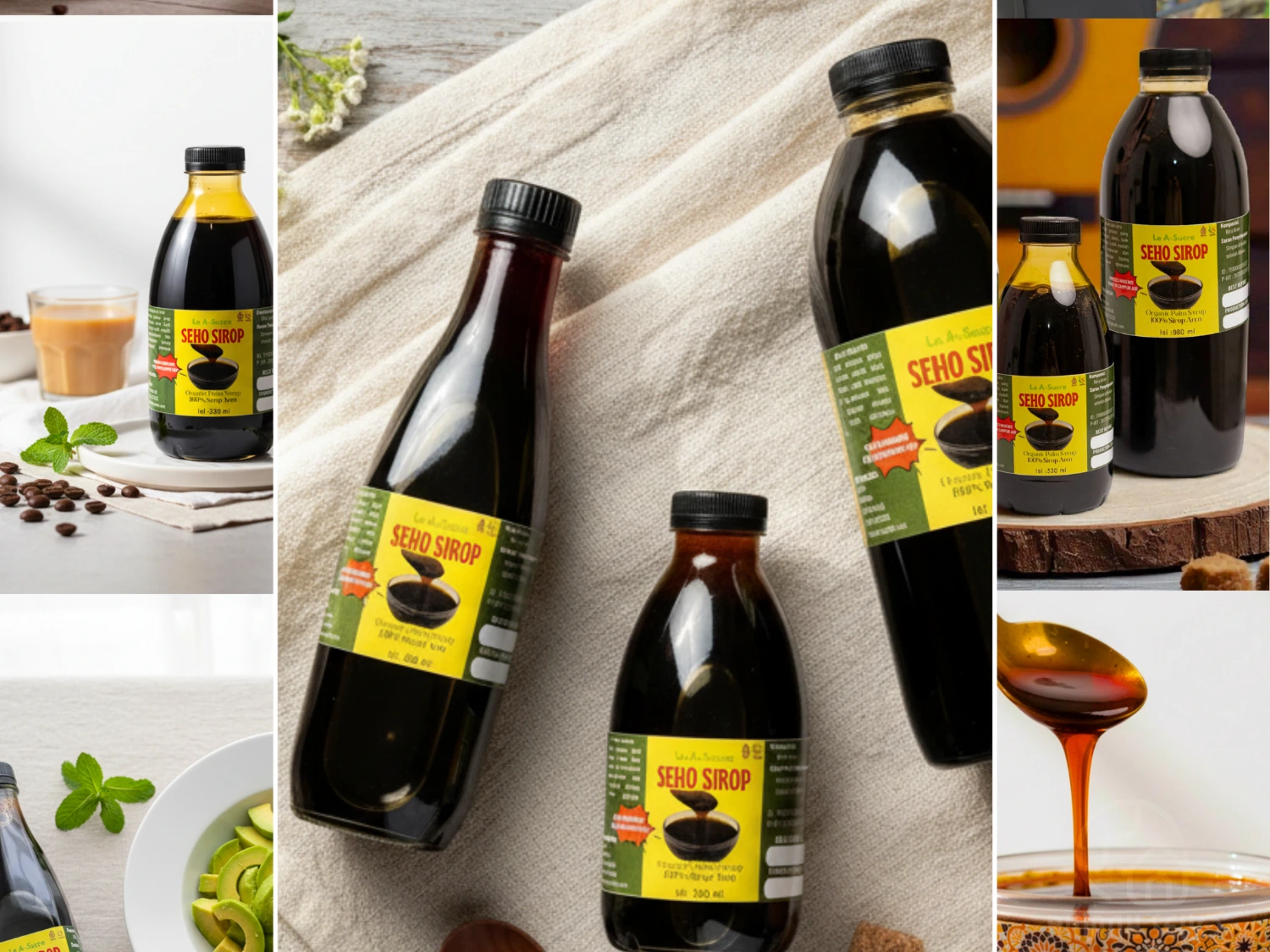
At PT. Rumah Seho Nusantara, our L’Arbre Seho Arenga Palm Syrup is produced with controlled specifications to support professional food applications and international trade.
Our product standards include stable Brix 70–72, Ash Content 1.10–1.15%, authentic Arenga palm flavor, hygienic production, and no added preservatives.
These specifications provide a more predictable foundation for manufacturers sourcing palm syrup for commercial applications.
Documentation Supports a Smoother Supply Chain
Global trade involves more than the physical movement of products.
Every shipment also requires clear communication and accurate documentation.
Commercial invoices, packing lists, shipping documents, and product information help buyers, logistics providers, and relevant authorities understand the shipment.
Errors or unclear information can create delays and unnecessary complications.
For safe palm syrup global supply chains, documentation should therefore be treated as part of the export process rather than an afterthought.
A reliable exporter coordinates product information, packaging details, shipment quantities, and commercial documents carefully.
Clear communication is equally important.
Buyers should understand what is being shipped, how it is packed, and what specifications apply to the product.
Transparency helps reduce misunderstandings before the shipment arrives.
Communication Protects Buyers from Unexpected Problems
Global supply chains involve many parties.
Suppliers, freight forwarders, shipping lines, ports, customs authorities, and buyers may all be involved in moving a single shipment.
Because of this complexity, communication becomes essential.
A reliable supplier should provide relevant updates when necessary and communicate clearly about production schedules, packaging arrangements, and shipment preparation.
Unexpected challenges can occur in international logistics.
The important question is not whether every shipment will always follow the original schedule perfectly.
The real question is how the supplier responds when conditions change.
Strong communication allows buyers to plan their inventory and production more effectively.
It also helps build long-term confidence between exporters and international customers.
Reliable Supply Chains Are Built on Preparation
The safest supply chains are not created by luck.
They are created through preparation.
A reliable palm syrup exporter considers product quality, packaging, storage, handling, logistics coordination, documentation, and communication as connected parts of the same process.
If one part fails, the entire supply chain can be affected.
For manufacturers importing ingredients from overseas, supplier reliability is therefore just as important as the product itself.
A good palm syrup must arrive safely, but the supplier must also demonstrate the ability to manage the process behind the shipment.
This is what transforms a simple export transaction into a reliable long-term supply relationship.
PT. Rumah Seho Nusantara Supports Export-Ready Palm Syrup Supply
At PT. Rumah Seho Nusantara, we understand that international buyers need more than an authentic product.
They need confidence in the entire supply process.
Through L’Arbre Seho, we produce Arenga palm syrup with controlled specifications and prepare our products for international food supply applications.
Our palm syrup is developed with:
- Stable Brix 70–72
- Ash Content 1.10–1.15%
- Authentic Arenga palm flavor
- Hygienic production
- No added preservatives
- Shelf life up to 18 months
- Export-ready packaging options based on buyer requirements
By focusing on product quality and careful export preparation, we aim to support buyers looking for a dependable Indonesian source of palm syrup.
Conclusion
A successful international shipment depends on much more than transportation.
Safe palm syrup global supply chains require careful attention from production to final delivery.
Product quality, controlled specifications, suitable packaging, proper cargo handling, clear documentation, and reliable communication all contribute to protecting the product throughout its journey.
For international buyers, choosing the right supplier means choosing a partner that understands the responsibility behind every shipment.
At PT. Rumah Seho Nusantara, our L’Arbre Seho Arenga Palm Syrup is prepared to support international food manufacturers seeking authentic Indonesian palm syrup with consistent specifications and export-ready handling.
Because in global trade, a quality product is not truly delivered until it arrives safely.
Contact Us
PT. Rumah Seho Nusantara
Manufacturer and Exporter of Palm Sugar from Indonesia
📞 WhatsApp: +62 896 9888 2428
📧 Email: export@palmlarbreseho.com
📸 Instagram: @rsn_indonesia
🌐 Website: palmlarbreseho.com