Halal and Export Standards at Rumah Seho Nusantara
When a buyer chooses a palm sugar supplier, product quality is only one part of the decision.
Buyers also need evidence.
They need to know where the product comes from. They need to understand how the manufacturer controls quality and need confidence that the supplier can provide the documents required for commercial transactions.
This is why Rumah Seho Nusantara certifications and quality standards matter.
For PT. Rumah Seho Nusantara, certification and documentation are not simply marketing tools. They form part of the company’s commitment to transparency, product safety, and responsible trade.
What Certifications Does Rumah Seho Nusantara Hold?
PT. Rumah Seho Nusantara holds Halal certification for its palm sugar products. The company also prepares export documentation and laboratory test results to support international buyer requirements.
It is important to make one distinction.
Not every export document is a certification.
Halal certification is a formal certification. Laboratory test results provide evidence about product characteristics and safety parameters. Export documents support customs and international trade processes.
Together, these elements help buyers conduct proper supplier due diligence.
This distinction also makes the process more transparent for international buyers.
Halal Certified Palm Sugar from Indonesia
Halal certification is particularly important for palm sugar businesses serving Indonesia and international markets.
Indonesia has a large Muslim consumer market. Halal assurance can therefore influence purchasing decisions for both consumers and food businesses.
The same consideration applies to many export destinations. Buyers in the Middle East and parts of Southeast Asia may require halal-certified ingredients as part of their sourcing process.
But what does halal certification actually mean?
For a food product, halal assurance involves more than simply looking at the final ingredient.
The production process also matters.
Raw materials, ingredients, processing, handling, and production practices must meet applicable halal requirements. This creates confidence that the product has passed an established halal assessment process.
For a buyer, this provides an important layer of assurance.
It also makes halal certified palm sugar Indonesia a more suitable sourcing option for businesses that serve halal-conscious consumers.
Why Laboratory Testing Matters
Certification alone does not answer every question about a food ingredient.
A serious buyer may also want information about the product’s physical and chemical characteristics.
This is where laboratory testing becomes important.
Laboratory analysis can provide objective information about specific product parameters. Depending on the test, buyers may review characteristics such as moisture, ash content, heavy metals, microbiological parameters, or other specifications relevant to the product.
For an exporter, these results can support communication with buyers and help demonstrate that the product meets agreed specifications.
At Rumah Seho Nusantara, laboratory results form part of the company’s export preparation.
This is especially useful for B2B buyers. A food manufacturer does not only need a product sample. The buyer also needs technical information that can support internal quality assurance and procurement decisions.
Export Standards Are More Than a Certificate
Many new importers assume that an exporter should have one universal “export certificate.”
In reality, international food trade does not work that simply.
Requirements can differ according to the destination country, product category, buyer, and intended use.
An exporter therefore needs to prepare the correct documentation for each shipment.
This can include commercial documents, product specifications, laboratory results, packing information, and customs-related documents. Additional certificates may apply depending on the destination and buyer requirements.
For this reason, export standard palm sugar certification should be understood as a broader concept.
Export readiness involves documentation, product compliance, packaging, logistics, and quality control. The exact requirements should always be confirmed for the destination market.
Quality Control Starts Before Export
A certificate is only one part of quality assurance.
The product must also receive consistent attention during production.
This is where food engineering and process control become important.
Palm sugar is a natural agricultural product. Its characteristics can vary depending on the raw material and production conditions.
Consistent processing helps manufacturers manage these variations.
At Rumah Seho Nusantara, quality control considers the product from a manufacturing perspective. The goal is not simply to produce palm sugar. The goal is to create a product that can meet defined specifications and remain suitable for commercial applications.
For B2B buyers, this distinction is important.
A supplier should be able to discuss product specifications, packaging, shelf life, laboratory results, and production processes. These details help buyers evaluate whether the supplier can support a long-term supply relationship.
Why Buyers Should Ask for the Documents
Trust should not depend only on what a supplier says.
Buyers should verify it.
For this reason, prospective buyers are encouraged to request copies of relevant certification and supporting documents from PT. Rumah Seho Nusantara as part of their due diligence process.
This may include the applicable Halal certification, laboratory test results, product specifications, and export-related documentation.
Reviewing these documents allows buyers to check important details directly.
They can confirm the certification scope, They can review validity dates. They can compare product specifications with their own requirements, also identify additional documents needed for their destination market.
This is a normal part of professional international sourcing.
A transparent supplier should be prepared to support that process.
Building Trust Beyond the Certificate
For international buyers, certification is not the final destination.
It is the beginning of a deeper evaluation.
A reliable supplier should combine certification with consistent manufacturing, transparent documentation, responsive communication, and the ability to support different commercial requirements.
This is the approach behind L’Arbre Seho, the palm sugar brand of PT. Rumah Seho Nusantara.
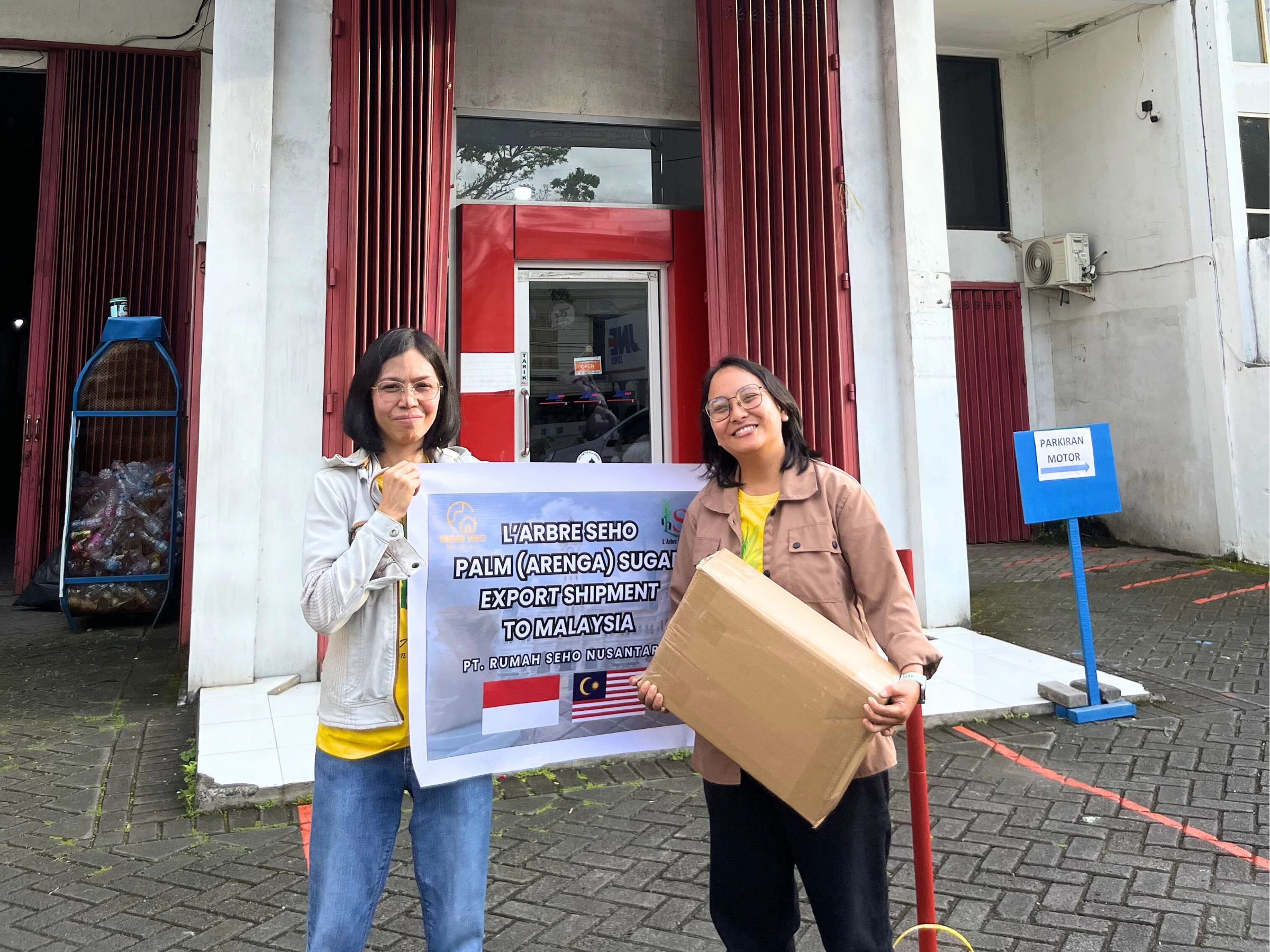
L’Arbre Seho brings Indonesian Arenga palm sugar to both domestic and international markets. The brand combines local agricultural resources with controlled production and export-oriented preparation.
The objective is simple: make Indonesian palm sugar easier for serious buyers to source with confidence.
Conclusion
PT. Rumah Seho Nusantara builds its credibility through more than product claims. Its approach combines Halal certification, laboratory testing, export documentation, and food engineering-based quality control to support reliable palm sugar production and distribution.
Through L’Arbre Seho, these standards become part of a broader commitment to connecting Indonesian Arenga palm sugar with domestic and international buyers.
For buyers, however, trust should always be verified. We welcome prospective partners to request relevant certification and supporting documents as part of their due diligence process.
Because in international food trade, a trusted supplier is not simply one that promises quality.
A trusted supplier is one that can provide the evidence behind it.
Contact PT. Rumah Seho Nusantara
PT. Rumah Seho Nusantara
Manufacturer & Exporter of Indonesian Palm Sugar
L’Arbre Seho
WhatsApp: +62 896 9888 2428
Instagram: @rsn_indonesia
Website: www.palmlarbreseho.com
Email: export@palmlarbreseho.com